
If reading, spelling, or processing written words suddenly becomes harder in adulthood, it is reasonable to wonder, can you develop dyslexia later in life? The short answer is more nuanced than a simple yes or no.
Developmental dyslexia is typically a chronic learning disability due to problems of word reading and spelling which may appear during development rather than de Novo in previously skilled readers as explained in guidance about developmental dyslexia and learning disorders.
All definitions current say dyslexia involves interaction of genetic, neurobiological and environmental factors during development.
That does not mean an adult cannot wonder, Can You Develop Dyslexia Later in Life, when reading difficulties appear for the first time. A person may have lived with decades of undiagnosed dyslexia and may only acknowledge its existence if work, college or other commitments begin to require more reading to be performed.
Or a person could have read with perfect ease normally, then develop an acquired reading disorder as a secondary complication after other neurological disorders or lesions of the brain.
Knowing the difference is useful because appropriate testing and remedial strategies are different in the two conditions. A lifetime of reading difficulty would require one kind of test whereas a change to reading ability with rapid onset would need medical investigation.
What Is Dyslexia?
Specific learning disorder: Learning that is significantly below other cognitive abilities in accuracy of word reading/recognition orfluency of word reading, and/or in accuracy of spelling or decoding. May be specified by what is affected (e.g., spelling, reading accuracy, reading speed, decoding fluency).
For anyone asking, Can You Develop Dyslexia Later in Life, it is important to understand that dyslexia is not simply a problem with seeing letters correctly, and it is not a sign of low intelligence. One can have wonderful logic and language skills, high imagination or a deep area of professional experience yet have very real difficulties with reading and spelling.
Another fact is that it’s not that you only misplace your letters and make spelling blunders now and again. Many people make reading mistakes especially if they are exhausted or their concentration levels are low. Dyslexia is when the problem is more prolonged for literacy functions.
Developmental dyslexia versus acquired reading problems
This distinction between developmental and acquired problems is particularly important for adults.
Developmental dyslexia is there form the start as part of the person’s development process. As it is an underlying difficulty the problem is first recognized in child hood but the diagnosis itself might only be provided in adolescence or even adulthood.
Acquired dyslexia on the other hand, sometimes placed within acquired reading disorders/alexia in adults, denotes a loss or impairment of established skills in reading. From as early as in the study of adults, reading impairments could be divided into acquired and developmental reading disorders.
Hence, it is apparent that the situation of an adult that cannot remember how words look like as after neurological damage, differ tremendously compared to the adult who had already problems with reading prior the insult.
Can You Develop Dyslexia Later in Life?
Typically not for developmental dyslexia. Dyslexia is defined as developmental because it is not the case that it is a condition which first appears only in adulthood. The underlying difficulties will have arisen during development, even though they were only later identified.
Nonetheless, there may be a time at which an adult is given a diagnosis of dyslexia for the first time at 30, 40, 50 or some even later age. However this does not mean that the individual had not, in fact, had dyslexia from the time the underlying difficulties arose. What it means is that the difficulties that the individual was having occurred earlier but were masked or perhaps of lesser consequence.
For example, the child may have always relied on rote memory of words familiar to him, may have relied on context to know words unfamiliar to him and tried to avoid reading, or has spent a much longer time than his peers working on reading material. For the purposes of childhood schooling with perhaps strong performance on verbal reasoning or other cognitive skills, these stratagems may have been somewhat effective.
Later, however, demands at university may involve much technical reading or a new job may involve considerable reading unfamiliar words or writing lengthy reports or documents-and the individual, whose skills has changed so gradually (through use and compensation) that he didn’t realise what he was being called upon to do was much more complex to him than to his peers, may find reading at last becomes difficult.
Research on adults also helps answer the question, Can You Develop Dyslexia Later in Life, by showing that people with developmental dyslexia can continue to experience literacy-related difficulties into adulthood, including problems with spelling, reading fluency, and decoding.
Why Is Dyslexia Sometimes Diagnosed in Adulthood?
A late diagnosis can happen for many reasons.
Strong coping strategies can hide the problem
The people concerned often find that they have developed ways of avoiding the difficulties with reading that are reasonably successful. They may re-read something multiple times, or read it in audio, use rote memory with spoken input, not read out loud, rely on spelling/grammar checkers.
Such approaches may help conceal how it feels to have dyslexia, but the dyslexia itself is still there. A person might therefore get to adulthood without realizing how differently people around them experience reading.
School may not have identified the pattern
Children aren’t universally diagnosed with a reading deficit, and instead, there might be characteristics mentioned that label them as slow or careless. Others might be labelled inattentive or lacking good spelling, without the literacy deficit even being recognised. Others may, however, reach standard required that allows their problem to pass unnoticed for their entire school career. Diagnosis as an adult can often be puzzling for people who do reasonably or even exceptionally well in school: a good ability with logic and persistence can see a child well compensated for by a supportive teacher.
Adult responsibilities expose weaknesses
Reading demands often change dramatically over a lifetime.
For someone wondering, Can You Develop Dyslexia Later in Life, a person who could manage school assignments may struggle when a job requires rapidly processing lengthy technical documents. Someone who rarely had to read unfamiliar terminology may have difficulty when a new profession introduces specialized vocabulary.
The underlying reading difficulty may not have changed dramatically. The environment has.
Increased self-awareness can reveal an old pattern
Adults sometimes recognize a pattern after watching their children struggle with reading or after learning about dyslexia through education or workplace discussions.
They may suddenly connect experiences that previously seemed unrelated:
- Persistent spelling difficulties
- Slow reading
- Avoidance of reading aloud
- Difficulty decoding unfamiliar words
- Trouble remembering written instructions
- Needing more time to complete reading-heavy tasks
- Frequent rereading
- Difficulty organizing written work
These signs do not prove dyslexia individually. They can, however, provide a reason to seek a proper assessment.
What If Reading Problems Truly Begin Suddenly?
The sudden onset is distinctive. It is not necessarily dyslexia to go from reading fine to not recognizing any words, comprehending, reading sentences or writing sentences and word recognition in general terms. Problems in reading may arise related to conditions and neurological causes, brain injury, stroke etc. and acquired reading disorders after neurological injury can help explain why sudden changes in reading ability require medical evaluation.
In neuropsychology there is recognition of acquired reading disorders which involve impairment in existing reading structures.
The chronicity is significant. A progressive lifelong pattern has a different underlying basis from a sudden onset which may prompt further medical attention.
Sudden reading difficulty after a neurological event
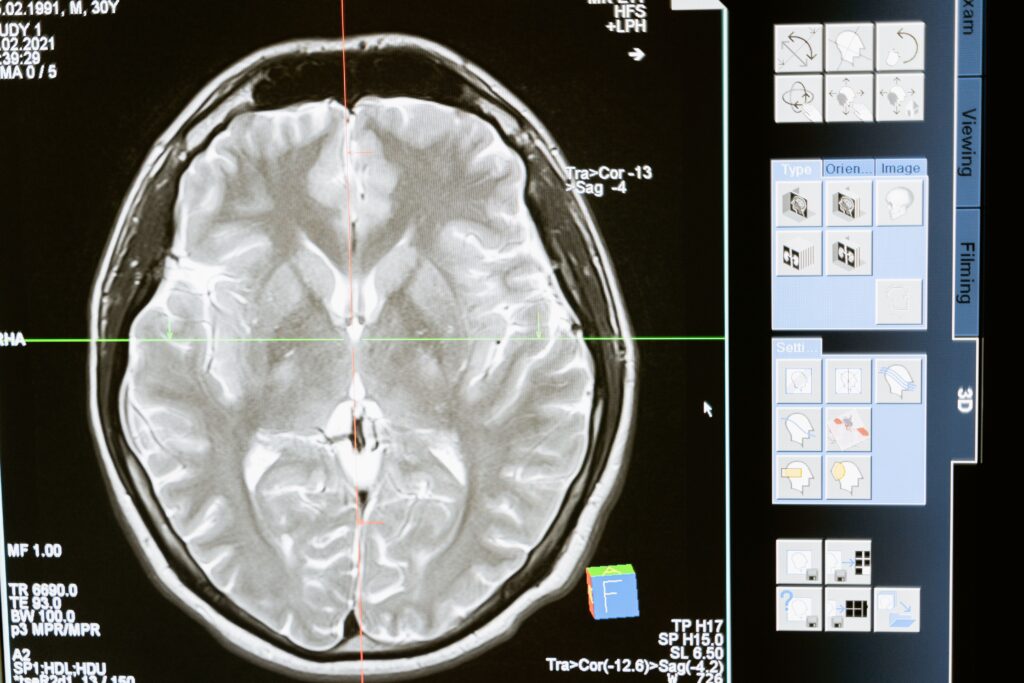
After a stroke, head injury, during an event involving the brain resulting in a seizure, after the patient has undergone neurosurgery, or in association with another neurological disorder the reading difficulty calls for a clinician’s interpretation.
The signs may be such that ordinary words don’t make any sense at all, words can’t be read and require reading in a slow and clumsy way to be decoded, or the patient can produce verbal communication of normal quality but can’t comprehend written language like before. That warrants other form of clinical presentation as opposed to evaluation of an adult with life-long, developmental dyslexia.
In addition to the acquisition of reading problems, new reading difficulties can be coupled with acute weakness or sudden facial paralysis, difficulties with speech, confusing thoughts, blurring of vision, severe headaches, and/or others stroke indicators for immediate treatment in an Emergency Room.
Signs That an Adult May Have Undiagnosed Dyslexia
There is no single symptom that establishes a diagnosis. Still, a consistent history can provide useful clues.
Adults with developmental dyslexia may experience difficulties involving:
Reading fluency
Reading may be accurate but unusually slow, or accuracy itself may suffer when the material contains unfamiliar words.
A person might understand the subject perfectly when it is explained verbally but struggle to get through the written version.
Decoding unfamiliar words
Recognizing common words from memory can be easier than sounding out a new or unusual word.
This may become especially noticeable with names, technical vocabulary, medical terminology, or words from unfamiliar subjects.
Spelling
Spelling can remain a particularly persistent difficulty in adults. Research involving adults with developmental dyslexia has found spelling problems to be a prominent marker, alongside reading fluency and unfamiliar-word decoding.
Someone may know exactly what they want to write but struggle to produce the correct spelling consistently.
Reading aloud
When reading aloud people may need to focus far more than when reading silently. They might read slowly, skip words and sentences, stumble or feel awkward reading unaccustomed text in public.
Written organization
Dyslexia is essentially concerned with reading; but it can include and affects writing and the practical needs of written discourse of an academic or work nature. It can become frustrating to have to expend as much effort in to writing down the words as that it takes to compose them.
There are also other possibilities than these alone and it is the overall assessment that is crucial.
What Other Conditions Can Make Reading Feel Hard?
The fact that an adult has reading difficulties does not mean that they are dyslexic.
Other underlying factors such as attention problems, difficulties with language or memory, visual defects, fatigue, stress, sleep disruption, brain processes or other cognitive functions can have a detrimental effect upon reading performance.
Furthermore while ADHD and dyslexia commonly occur together, one does not cause the other.
For instance while attention deficit can mean that an individual quickly finds that they have lost their place in a text or have got to the end of the several paragraphs before registering it – it could sound like reading difficulties but the problem could actually be with attention not language-based reading skills.
In the same way a visual problem could well interfere with comfortable and effective reading when, in fact, their language-based reading skills may well remain perfectly adequate, in principle.
It is this which is why on-line diagnostic questionnaires should not be taken as authoritative and self-diagnoses should be avoided.
How Is Adult Dyslexia Evaluated?
There is no single quick test that can answer every adult’s question.
A proper assessment generally considers the person’s developmental and educational history along with current reading and language abilities.
Step 1: Review your history
Think about what reading and spelling were like during childhood and adolescence.
Useful information can include:
- School reports
- Previous educational testing
- Teacher comments
- Past accommodations
- Childhood reading difficulties
- Family history of dyslexia or reading problems
- Longstanding spelling difficulties
- Experiences with reading aloud
A history of similar difficulties from childhood can be particularly informative when distinguishing developmental dyslexia from a newly acquired problem.
Step 2: Describe your current difficulties
Be specific about what is happening now.
For example, “I struggle with reading” is less informative than explaining that you can understand a passage when it is read aloud but have difficulty decoding unfamiliar words yourself.
Step 3: Seek an appropriate professional assessment
Based on your region, evaluation may be undertaken by the psychologist, neuropsychologist, educational specialist, speech-language clinician, or another professional that is trained to assess adult literacy and learning issues.
The right professional can depend on the nature of the question to be asked:
A person fearing “childhood dyslexia that just never went away” may require a different assessment than a person experiencing a more recent loss of normal reading functioning.
Step 4: Consider other explanations
A good assessment does not focus only on proving one diagnosis. It also considers other factors that could account for the symptoms.
This is particularly important when the problem is new, rapidly changing, or accompanied by other cognitive or neurological symptoms.
Can Dyslexia Become Worse With Age?
It is quite unusual for dyslexia alone to present as a new illness of aging. It is a developmental learning disorder; so it is something which may manifest differently at different stages of life while perhaps only becoming significant at certain times and in relation to specific environments or tasks.
An adult may perceive that it is becoming more difficult to read as the reading demands have been elevated.
For example a person may transition from a role with minimal report writing to one that necessitates voluminous paperwork. Such heightened demand will serve to exacerbate pre-existing difficulties.
Moreover new problems may co-exist and interact with aging that have independent consequences for the reader, like deterioration in vision, illness of the central nervous system or medication side effects. If genuine changes post years of relative consistency are being perceived after an individual was previously performing as would be expected, then it is worth discussion with their health care provider rather than attributing them directly to dyslexia.
What Can Help Adults With Dyslexia?

A diagnosis does not change a person’s intelligence or ability to learn. The goal of support is to reduce unnecessary barriers and make reading and writing more manageable.
Assistive technology
Text to Speech tools can mean writing is heard instead of needing to be deciphered solely by reading. Speech to Text tools can also alleviate some of the motor strain that would be involved in writing.
Useful tools may include Audiobooks, electronic text, spelling checks and screen readers according to individual need.
Technology alone does not replace adequate instruction, but may serve as a practical accommodation.
Structured literacy support
Adults who have persistent decoding or spelling difficulties may benefit from structured, explicit instruction targeting the underlying literacy skills.
The appropriate approach depends on the individual’s assessment results rather than simply their age.
Workplace accommodations
Some adults benefit from reasonable adjustments such as additional time, alternative formats for written information, assistive technology, or other changes that address the specific barrier.
The exact accommodations available depend on the workplace, location, role, and applicable policies.
Personal strategies
Simple habits can also reduce cognitive load.
Breaking long documents into sections, using headings, listening to text when appropriate, previewing unfamiliar terminology, and allowing additional reading time can make demanding material easier to manage.
The best strategy is the one that addresses the person’s actual difficulty rather than forcing everyone into the same system while learning and cognitive support strategies can make challenging tasks more manageable.
Common Misunderstandings About Adult Dyslexia
One myth is that adults cannot be dyslexic just because they have been taught to read; a person who is dyslexic is still a literate human being. Many people develop functional reading and still have reading, fluency, spelling or decoding challenges.
Another myth is that dyslexia involves reading backwards and having visual reversal problems; such reversals occur in preliterate stages and can be characteristic of dyslexia.
Lastly, low intelligence is not dyslexia as dyslexia is associated with literacy tasks only rather than literacy and intellectual functioning.
A third error when dealing with adult dyslexic issues is when assuming that any adult who is experiencing problems with reading should have had an identified condition during their childhood. Adults find compensatory techniques they can carry out during early life, or once life demand increases, or educational/professional expectations are raised then the difficulties emerge and only when people have had problems in the literacy realm then a request is made for some examination/review.
A final misconception and fallacy is where loss of skills after development in this sphere will always involve developmental dyslexia, and it will surely involve some neurological events occurring during people’s adult life.
When Should You Talk to a Professional?
You could consider a diagnosis if you or your child has been having difficulties with reading and/or spelling throughout their life, and if it is having a major impact on school/work/daily life.
If there’s a desire to explain why reading feels as though it takes significantly more work than others might appear to experience, then an expert evaluation would be considered valuable.
A medical diagnosis has greater immediacy if reading levels unexpectedly and considerably decline from what they normally are and further neurological signs are present.
The aim is not just to achieve “a label”, but rather a clear explanation of the kind of support that may assist. For an adult developmental dyslexia, discovery can provide avenues to the relevant literacy help, and adaptations helpful in daily life. For someone suffering from recent reading difficulty, the identification of a neurological issue would have far greater significance.
Frequently Asked Questions
1.Can dyslexia suddenly appear in adulthood?
Typical developmental dyslexia does not suddenly appear in adulthood. It is associated with developmental differences that begin earlier in life, although a person may not be diagnosed until adulthood. A genuinely new loss of reading ability can have other causes and should be medically evaluated.
2.Can you be diagnosed with dyslexia at 40 or 50?
Yes. A person can receive a first diagnosis in adulthood even if the underlying difficulties have existed since childhood. Adult diagnosis may occur when increased reading demands make previously compensated difficulties more noticeable. Identification and support can be useful at any age.
3.What does adult dyslexia look like?
Adults may experience slow reading, difficulty decoding unfamiliar words, persistent spelling problems, trouble reading aloud, or a need to reread material. Symptoms vary, and these difficulties can also have other causes, so they should not be used alone to self-diagnose dyslexia.
4.Can a stroke cause dyslexia-like symptoms?
A stroke or other neurological injury can cause an acquired reading disorder that may resemble some aspects of developmental dyslexia. Because this represents a change in previously established abilities, sudden reading problems after a neurological event require appropriate medical assessment.
5.Can stress make dyslexia worse?
Stress does not cause developmental dyslexia, but it can make existing reading difficulties feel more difficult to manage. Fatigue, anxiety, distraction, and increased cognitive demands may also reduce reading efficiency. Persistent or newly emerging problems should not automatically be attributed to stress.
6.Is there a cure for dyslexia?
Dyslexia is not generally described as a condition that is cured. Instead, people can develop stronger literacy skills and effective strategies, while appropriate instruction and accommodations can reduce its impact. Support needs can change over time and should be tailored to the individual.
Conclusion
So, can you develop dyslexia later in life? Typical developmental dyslexia does not suddenly begin in adulthood. Instead, many adults discover that they have had longstanding reading or spelling difficulties that were never formally identified. Greater academic or workplace demands can make those difficulties much more obvious.
On the other hand, if a child is an excellent reader, but then suddenly loses their ability and performance then that is likely due to a recently acquired language disorder caused by a brain injury rather than developmental dyslexia. Thus the key contrast is one of continuous and acquired issues. In addition to a potential assessment for dyslexia in adulthood, if the difficulties present suddenly, have been present for a long period of time, or if any neurological symptoms accompany the learning challenge, a referral for a doctor’s review would likely be more appropriate.