This is about a slightly sore feeling under the tongue or in the inside of your cheek which can be very irritating if it appears to come on as soon as you start eating. One of the common causes could be a salivary gland stone or sialolith. A salivary gland stone is a deposit of minerals within a salivary duct which can partially obstruct the regular flow of saliva producing, for instance, swelling, tenderness, dryness or pain.
People searching for how to squeeze out salivary gland stone are often hoping there is a simple way to remove a stone they can see or feel. For a tiny stone on the opening of a salivary duct that has been accidentally removed using slight stimulation to increase saliva flow, then manually squeezing and digging around the wound can damage a small, sensitive area and could potentially promote any infection if one is present.
The best way forward will always come back to identifying what is where, and what the signs and symptoms are indicating to allow careful judgment of what you are going to try and do, before taking up the opportunity to not do anything and try home remedy where the stone can access easily.
What Is a Salivary Gland Stone?
Salivary gland stones are concretions (hard masses) of various sizes which form within a salivary gland or within a salivary duct that carries saliva from the gland into the mouth. The scientific term is sialolithiasis. Salivary glands secrete saliva that normally passes through tiny ducts into the oral cavity, supporting normal saliva production. Small stones may partially or totally block the duct.
When learning how to squeeze out salivary gland stone, it helps to understand where these stones usually form.The majority of salivary stones appear in the submandibular glands, which lie below the jaw and empty saliva through a duct under the tongue. However, stones can also form in the salivary glands which lie around the ear or cheeks-these are called the parotid glands-or occasionally in one of the smaller salivary glands.
A stone might be small enough to travel out without any intervention, but large or stone that is in a difficult position will often need to be treated by a dental surgeon, an oral surgeon or anENT (ear, nose and throat) specialist.
What does a salivary stone feel like?
Symptoms vary depending on the size and location of the obstruction. Common signs include:
- A hard or gritty bump beneath the tongue
- Swelling under the jaw or inside the mouth
- Pain that becomes stronger during meals
- A feeling of pressure in the affected gland
- Reduced saliva flow
- Tenderness around the duct opening
- Recurrent swelling that eventually settles
Pain around mealtimes is particularly suggestive because eating stimulates saliva production. If a duct is blocked, the increased saliva has difficulty reaching the mouth, creating pressure behind the obstruction.
Can You Squeeze Out a Salivary Gland Stone?
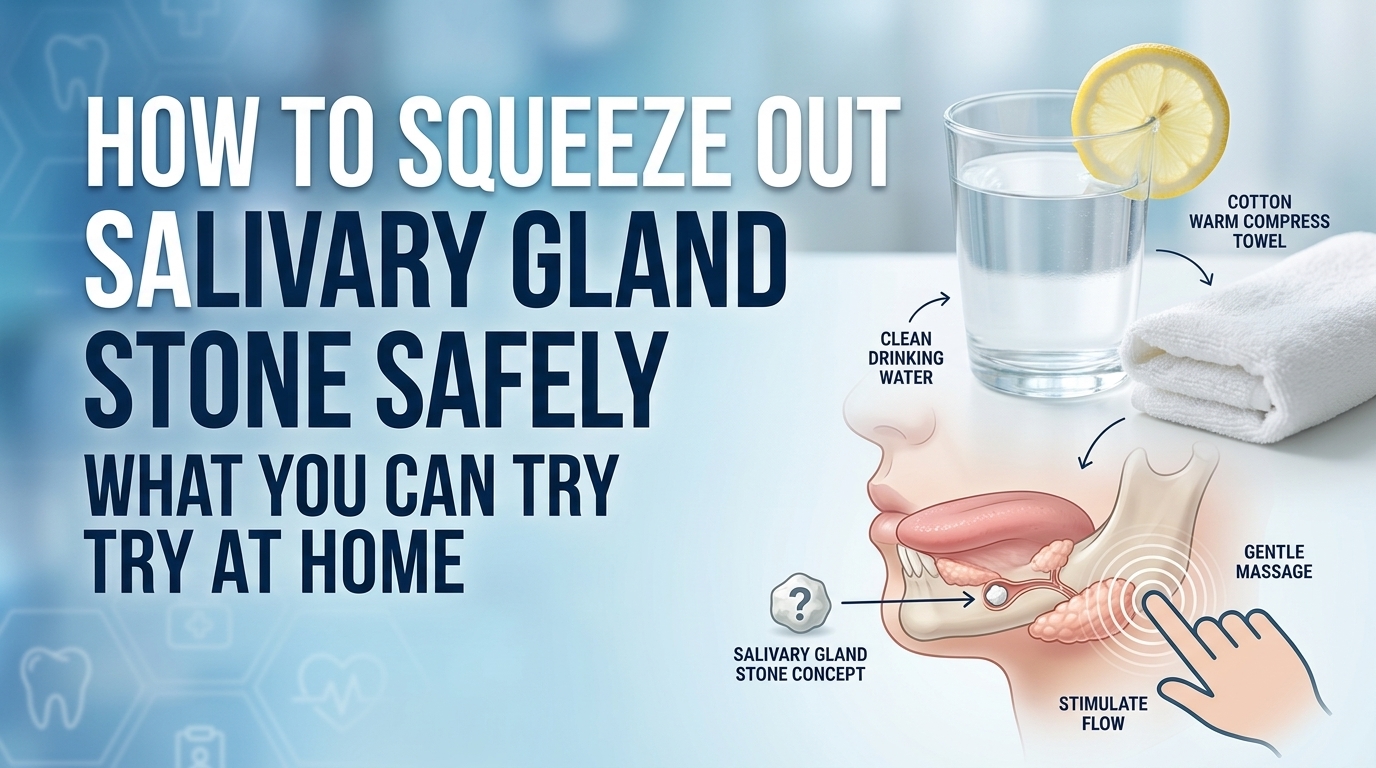
If you’re wondering how to squeeze out salivary gland stone, a small stone that is already close to the duct opening may sometimes come out with gentle massage and increased saliva flow. Use a very gentle approach. Do not squeeze and twist the gland with forceful pressure, probe under the tongue with an instrument, or jab at the point of tenderness hoping to dislodge the stone.
Gentle massage around (not into and with great pressure at) a stone located in the duct opening might promote passage into the mouth. Discontinue the effort if you note any substantial pain, swelling, bleeding, or impedance.
Don’t treat a stone that feels deep under the surface as if it is right there. It might really be located deeper within the duct.
How to Encourage a Small Stone to Pass
For a small, accessible stone without signs of infection, conservative measures are often the safest place to start.
1. Drink plenty of water
Proper hydration levels promote normal salivary flow and allow your mouth to be less likely to feel excessively dry. Drink water incrementally rather than all at once.
While hydration may not break up a formed stone, it does promote salivary flow while you wait the issue out.
2. Encourage saliva production
Sucking on a sour candy, such as a lemon drop without sugar can increase saliva production. Candy or lozenges should not have sugar, since repeated exposure to sugar can cause decay.
Extra saliva may cause a small stone close to the end of the duct to move outward.
If increased flow produces significant swelling or pain, discontinue stimulation. The duct can become more painful when blocked as more pressure may develop in the duct behind the blockage.
3. Use gentle massage
Should the stone be close to the oral opening, you should try to massage toward the mouth if you can define the location of the stone. The areas beneath the tongue or jaw may also be tender for a submandibular gland stone. However there is no need to apply pressure, to avoid breaking or extracting the stone.
The process is to stimulate movement of the stone.
Stop if the area becomes more tender, swollen or irritated.
4. Maintain good oral hygiene
In cases of irritated or blocked salivary ducts, particular attention should be given to maintaining the cleanliness of your mouth. Your usual dental care routine of brushing and cleaning interdentally should be rigorously maintained.
A clean mouth will not cause the calculus (stone) to dissolve but it will maintain your oral hygiene and provide minimal bacterial growth on any offending structure.
What You Should Not Do
The temptation to remove a visible stone can be strong, especially when it looks like a small white or yellow object beneath the tongue. Some self-removal methods found online are unnecessarily aggressive.
Avoid using:
- Needles
- Pins
- Tweezers inserted deeply into the duct
- Knives or other sharp objects
- Unsterilized dental tools
- Forceful squeezing
- Repeated digging beneath the tongue
The salivary duct is fragile, injury by perforation or tearing could lead to bleeding, edema, scar tissue formation or further inflammation. Bacteria may be introduced into an injured tissue thus facilitating infection.
Even should you succeed in moving it, you may cause an injury which would become an additional bigger problem.
Why Does a Salivary Stone Form?
Salivary stones form when the chemicals and minerals in the saliva deposit and harden. Exactly why and what it is, that causes stones to form in one person but not another is less clear cut. It may, however involve: Low salivary flow: Dehydration, drugs that reduce saliva production and conditions characterized by dry mouth may compromise normal saliva flow. The form and architecture of the salivary duct.
Why stones often cause pain while eating
Saliva is being produced, especially during eating and when you expect to eat. It is possible that a stone in one of the salivary ducts causes a blockage, and the gland carries on trying to exude the saliva anyway.
This may cause the gland to become swollen due to pressure. Patients can describe the pain starting shortly before or as the meal takes place, and then reducing after eating due to cessation of stimulation by the food itself.
This time-course related to meals is a useful sign that symptoms may represent salivary gland obstruction.
How to Tell a Stone From Other Mouth Problems
Not every hard or painful bump in the mouth is a salivary stone. Several conditions can produce similar symptoms.
When considering how to squeeze out salivary gland stone, it is also important to make sure the lump is actually a stone. Oral infection can be tender and produce swelling, an ulcer should result in an area of redness, not a hard lump. It is possible to get swelling of the salivary glands without stones, also several other problems can affect the oral cavity.
Location can give valuable information, an object under the tongue next to the opening of a salivary duct with small, hard, round object is more likely to be a stone rather than an unusual bump on the exterior gum. Howeverappearance alone can be difficult to tell definitive from one form to another. If the lump is persistent, or the symptoms are at all uncomfortable, the most reliable option will be an examination, not self diagnosis.
What Happens if the Stone Does Not Come Out?
Not all salivary stones can be extracted at home. Stones further back in the duct or gland can be difficult to extract from the mouth.
Your doctor may look at the duct and tell you whether or not the stone is extractable at home. In some cases an imaging study of the duct can help see the blocked area.
When considering how to squeeze out salivary gland stone, treatment can range from observation and conservative care to procedures designed to remove the stone. Some stones can be removed through the mouth if they are accessible, while others may require specialized techniques.
Minimally invasive treatment
Stones that become lodged may require additional surgical measures where specialists are able to go into the gland in order to remove the obstruction while minimally impacting normal function of the gland. Sialendoscopy, another treatment options where an endoscope is used to visualize the inside of the salivary duct and assist in stone removal in select situations, may also be an option. Treatment for stones is influenced by factors such as size of the stones, location within the duct system, volume and number of stones.
Signs of a Salivary Gland Infection
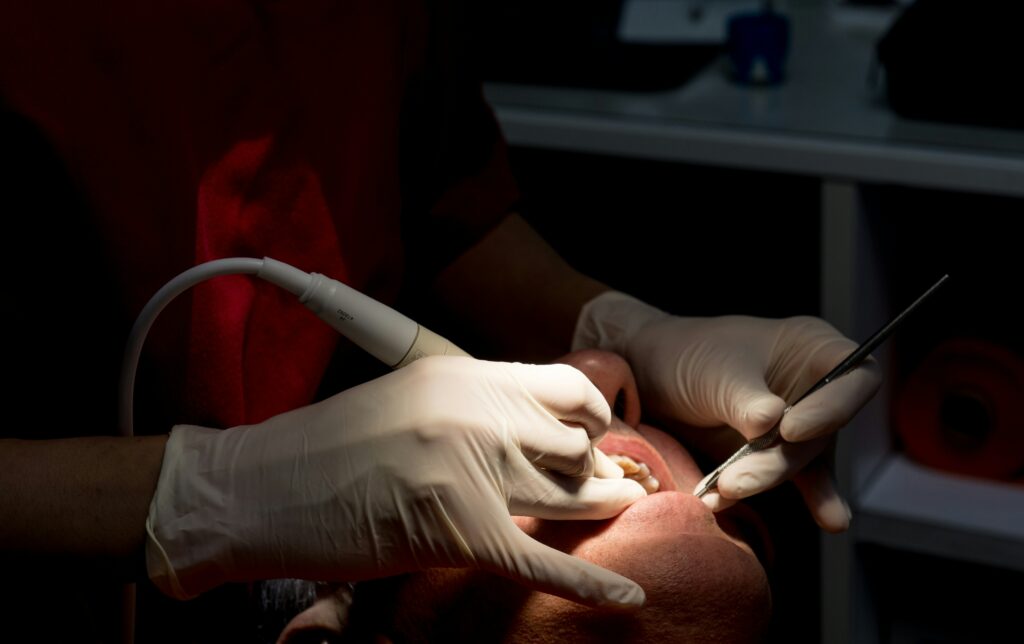
An obstructed salivary duct can sometimes become infected. This changes the situation because simply trying to push the stone out at home may not address the infection.
Watch for symptoms such as:
- Increasing swelling
- Significant or worsening pain
- Redness or warmth
- Fever or chills
- Pus or foul-smelling drainage
- Bad taste in the mouth
- Feeling generally unwell
- Difficulty opening the mouth
If these symptoms occur, seek medical or dental evaluation promptly.
A salivary gland infection can require professional treatment, and delaying care may allow the infection to become more serious, especially when oral infection symptoms worsen.
When Is It an Emergency?
In these cases you should not try and treat yourself. You should attend the accident and emergency if:
You have swelling around your mouth/jaw/neck and it is interfering with your ability to breathe or swallow. If the swelling is rapid in onset and of a significant extent it is still advisable to seek advice.
You find it hard to breathe, call emergency services instead of trying to manipulate the stone.
You are experiencing symptoms including swelling of the mouth, rapidly of increasing extent, and difficulties in swallowing.
Common Mistakes People Make
Pressing too hard
A person may assume that more pressure will make the stone come out faster. That is not necessarily true. Excessive pressure can irritate the duct and surrounding tissue.
Gentle measures should remain gentle. If a stone does not move, increasing force is not the answer.
Trying to cut the stone out
A visible stone may look like something that can be removed with tweezers or a sharp instrument. The surrounding anatomy makes this risky.
The tissue under the tongue contains blood vessels, nerves, and delicate structures. Cutting or puncturing it can result in injury.
Ignoring recurring symptoms
If swelling repeatedly appears during meals and then improves, the obstruction may still be present even if symptoms temporarily disappear.
Repeated episodes deserve dental or medical evaluation because the underlying blockage has not necessarily resolved.
Assuming every white spot is a stone
A white spot could have several causes. Treating an uncertain lesion as a salivary stone can lead to unnecessary irritation.
If you are unsure what you are seeing, an examination is safer than attempting extraction.
What Can Help Prevent Future Stones?
Although you are unlikely to be able to totally avoid salivary stones, ensuring the adequate flow of your saliva and having good oral hygiene could help. Ensure you drink plenty of fluids each day (especially if you have dry mouth) and carry on with your regular brushing and attend the dentist regularly.
Attend your doctor/clinician for persistent dry mouth and, if dry mouth is a side effect of your medication (especially if severe), do not discontinue this without discussing with the clinician who prescribed it as there may be alternative means of managing the problem. Regular attendance at the dentist will also help rule out other conditions of the mouth which may be mistaken for those in the salivary glands.
When Should You See a Dentist or Doctor?
Make an appointment if a suspected stone does not pass, keeps returning, or causes repeated swelling and pain.
Professional evaluation is particularly appropriate when:
- The lump remains for several days
- Symptoms repeatedly return during meals
- The stone appears deep or inaccessible
- Swelling continues to increase
- There is pus or foul drainage
- You develop fever
- You have significant pain
- You experience difficulty swallowing
- You are uncertain whether the lump is actually a salivary stone
A dentist, oral and maxillofacial specialist, or ENT specialist can determine whether the symptoms are caused by a salivary stone and recommend an appropriate removal method.
A Safer Step-by-Step Approach
If you suspect a small salivary stone and do not have signs of infection, a cautious approach is:
- Stay hydrated. Drink water regularly to support normal saliva flow.
- Stimulate saliva gently. A sugar-free sour candy or lozenge may encourage saliva production.
- Check the area without probing it. If the stone is clearly visible near the duct opening, avoid digging or inserting tools.
- Try gentle massage. Light pressure directed toward the mouth may help an accessible stone move.
- Stop if symptoms worsen. Pain, bleeding, increasing swelling, or resistance are reasons to stop trying to remove it.
- Monitor the symptoms. Note whether swelling and discomfort improve or continue.
- Seek professional care if it remains stuck. A deeper stone may require examination and a procedure rather than home extraction.
This approach prioritizes protecting the duct and surrounding tissue instead of forcing an uncertain object out.
Final Takeaway
If you are searching for how to squeeze out salivary gland stone, the safest answer is to avoid forceful squeezing or digging. Some stones very close to the opening may respond to moisture, salivation and very gentle massage, but when stones do not respond to these measures you should absolutely not attempt to remove them at home, especially with sharpened tools, as it is likely to cause trauma to delicate tissues and potential for infection.
Persistent swelling, repeated pain associated with eating, discharge (pus), fever, or inability to swallow are indications of needing professional examination, identification of stone location, and an adequate removal plan from an oral health professional, specialist, or even an ENT doctor. Aggressive and repeated use of mechanical force are not the solution when at-home care is unsuccessful.

FAQs
1.Can I squeeze out a salivary gland stone at home?
Small, accessible salivary gland stones may sometimes pass naturally with hydration, gentle massage, and increased saliva production. However, forceful squeezing is not recommended because it can injure the duct and increase the risk of infection.
2.What is the safest way to help a salivary gland stone come out?
Drink plenty of water, gently massage the area around the stone, and use sugar-free lemon drops or other tart, sugar-free candies to stimulate saliva. A warm compress may also help with discomfort and encourage saliva flow.
3.Can I use a needle or tweezers to remove a salivary gland stone?
No. Avoid needles, tweezers, pins, knives, or other sharp objects. Trying to dig out the stone can cause bleeding, tissue damage, and infection.
4.How do I know if a salivary gland stone is infected?
Increasing pain, redness, swelling, pus or foul drainage, fever, chills, or feeling generally unwell can indicate an infection. A blocked salivary gland can become infected when saliva builds up behind the stone, so these symptoms should be evaluated by a healthcare professional.
5.How long does a salivary gland stone take to come out?
There is no fixed time. Some small stones pass on their own, while others remain stuck and require professional removal. If symptoms continue or the stone does not come out, a doctor, dentist, or ENT specialist can determine whether further treatment is needed.
6.What happens if I cannot remove the stone myself?
A healthcare provider can examine the area and may gently remove an accessible stone. Stones that are deeper, larger, or difficult to reach may require procedures such as sialendoscopy or another form of removal.
7.When should I seek urgent medical care?
Seek urgent care if swelling becomes severe or rapidly worsens, particularly if it causes difficulty breathing or significant difficulty swallowing. A salivary gland infection can sometimes spread into deeper tissues of the neck and interfere with the airway.
Conclusion
If you are wondering how to squeeze out salivary gland stone, the safest approach is not to forcefully squeeze or dig at it.Larger stones can pass without more difficulty with lots of water, soft massage, warm compresses and foods that stimulate saliva or even a sugar-free sour candy. Do not try to use sharp objects or put a lot of pressure on the stone since you may injure the salivary duct or bring an infection into it. If a stone gets completely caught, hurts or swells often or is causing signs of infection then you need to see a healthcare provider.
Deeper stones, orstones that get stuck over a long period of time, are amenable to removal with the use of a technique called sialendoscopy, which is relatively minimally invasive. It will likely be safer for you than repeatedly trying to expel it on your own.