If you’re searching for how to speed up wisdom teeth recovery, you’re probably dealing with sore cheeks, a stiff jaw, and a calendar you’d like to get back to as soon as possible. Wisdom tooth extraction is commonplace, but recovering from this procedure can be a long and tedious process. Especially when you are anxious about potential complications such as dry socket, infection and ongoing pain. But there is good news! Generally, individuals recover from wisdom teeth surgery in a few days and can speed up this process, ensure that healing is smooth and effective, and also be safe under the guidance of a capable doctor.
The guide here consolidates expert tips that are supported by current dental practices on resting, maintaining good oral hygiene, nutrition, pain management, and identifying signs of potential trouble.
Why Wisdom Teeth Recovery Time Matters
Wisdom teeth removal: the recovery period Even though wisdom teeth extraction is a day surgery, your body experiences the process just like a surgery. After teeth extraction, it’s necessary to have time to form a blood clot in sockets, regenerate tissues and then heal completely, this dictates your wisdom teeth surgery recovery. About 3-4 days of healing is a reasonable expectation of how much better you will be, though full soft tissue healing generally occurs one to two weeks later, depending on the complexity of wisdom teeth removal.
Bone removal or all four teeth were impacted can take longer.
Understanding how to speed up wisdom teeth recovery matters for practical reasons too: It is your choices and behaviour within the first few days: diet, sleep, smoking, oral care practices can prolong your healing period or accelerate it. Getting a faster wisdom teeth healing has real benefits like going back to work, minimizing pain, managing it on a low dosage, reducing risks of urgent clinic visits and preserving the daily routine (and budget) of yours.
Understanding Wisdom Teeth Recovery: What’s Actually Healing?
To know how to speed up wisdom teeth recovery, it helps to know what your body is doing behind the scenes. When the dentist or surgeon removed your wisdom tooth, they create a socket a space between bone and gum that immediately becomes filled with blood. This blood clot acts as your first and natural dressing.
Over the next few days:
- The clot stabilizes and protects the underlying bone and nerve endings.
- New tissue begins to grow over the clot from the edges of the socket.
- Swelling and inflammation around the surgical site gradually decrease.
If you dislodge the clot too soon using suction (e.g., straws), aggressively rinsing, smoking, or trauma to the socket, your bone will be exposed. That’s a condition known as dry socket, one of the biggest culprits behind wisdom teeth recovery taking longer and being more painful than it needs to be. Everything we’ll cover about how to speed up wisdom teeth recovery rest, diet, saltwater rinses, avoiding straws and smoking is ultimately about protecting that clot, supporting your immune system, and keeping bacteria from causing infection.
Core Principles: How to Speed Up Wisdom Teeth Recovery Safely
Dentists and oral surgeons consistently highlight a few core principles for faster healing:
- Follow the written aftercare instructions exactly
- Protect the blood clot in each socket
- Control swelling early
- Eat soft, nutrient‑rich foods and stay hydrated
- Maintain gentle but consistent oral hygiene
- Avoid smoking, alcohol, and strenuous activity
- Monitor for warning signs and act early
Every practical tip you see online essentially falls under one of these categories. Let’s break them down in detail with real‑world examples and dentist‑aligned advice.
First 24 Hours: The Foundation for Fast Recovery
The first day after surgery sets the tone for the entire healing process. If you’re serious about how to speed up wisdom teeth recovery, this window is where your choices matter most.
Control Bleeding With Gauze
Right after the surgery, your dentist or surgeon puts gauze over each of the extraction areas, then asks you to bite down lightly on them for about 30-45 minutes to help encourage the blood clot to form and solidify. Don’t poke or “check” at that gauze (or area) frequently, and change the gauze pads when your dentist instructs you.
Rest Really Rest
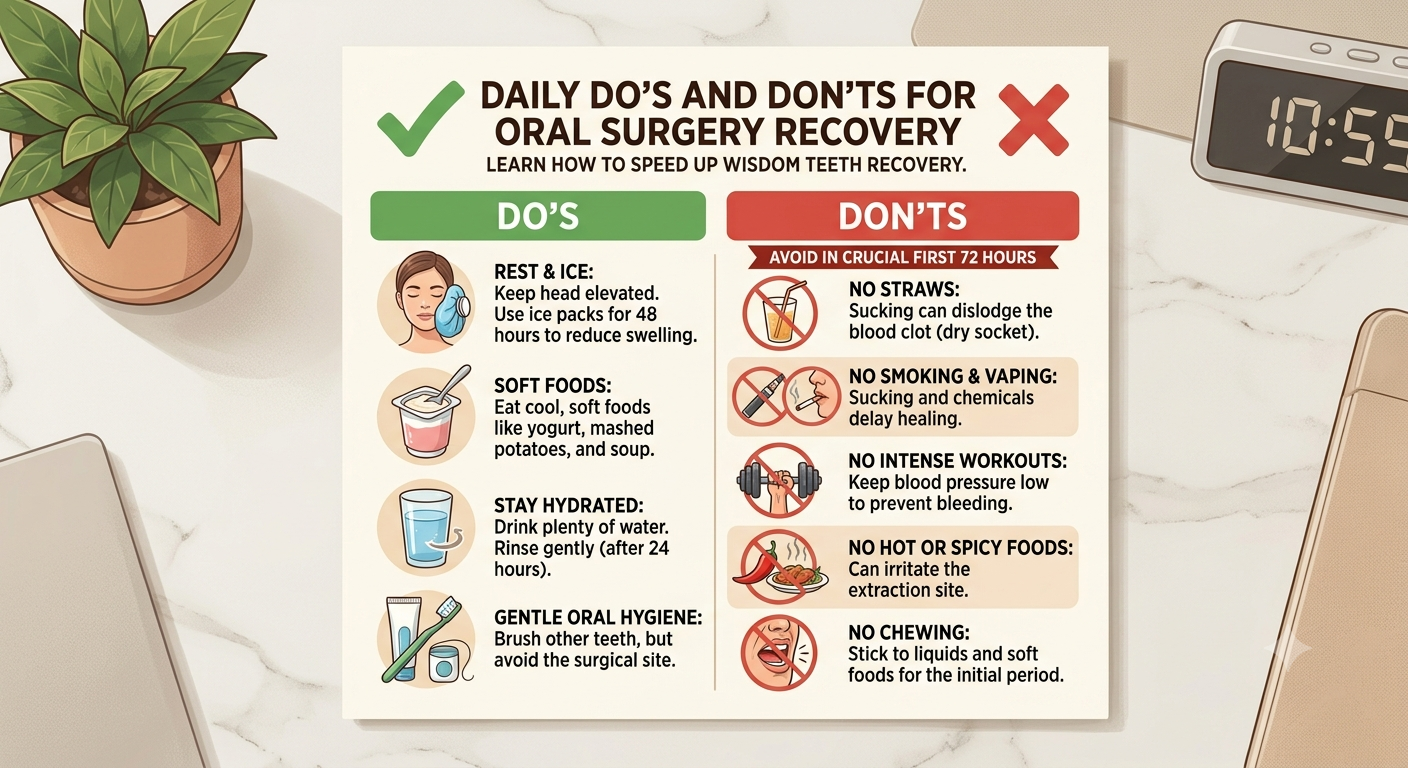
While it’s tempting to consider wisdom tooth extraction an errand and run back to your everyday routine the next day, your body needs power to repair. Most dentists recommend about 2-3 days off, the first of which involves resting as much as possible, sleeping as much as possible, and doing as little talking as possible. Using an extra pillow to keep your head elevated and using an armchair or reclining chair helps keep swelling and bleeding down.
Use Cold Compresses Early
Swelling generally peaks at around 48 hours after surgery and ice compresses applied to the cheeks in the first day can help reduce this spike. Many aftercare instructions will mention ice application for 15-20 mins on and 15-20 mins off within the first 24-48 hours, which leads to less swelling and less pain.
Absolutely No Straws, Smoking, or Harsh Rinsing
Almost every reputable guide on how to speed up wisdom teeth recovery agrees: avoid any strong suction or forceful movement in the mouth that can dislodge the clot. That includes:
- Drinking through a straw
- Spitting forcefully
- Vigorous mouth rinsing
- Smoking or vaping
In the first 24 hours, you should avoid mouth rinses entirely unless your dentist gives a specific instruction, and gently let liquids fall out of your mouth rather than spitting hard. This is one of the simplest but most powerful ways to speed up wisdom teeth recovery.
Diet and Hydration: Fueling Faster Healing Without Harming the Socket
What you eat and drink after surgery plays a major role in how fast your body repairs tissue. To genuinely support how to speed up wisdom teeth recovery, think “soft, cool, and nourishing” for the first several days.
Start With Soft, Lukewarm Foods
Dentists and hospital aftercare documents consistently recommend soft foods that don’t require much chewing:
- Yogurt, kefir, or smooth smoothies (no seeds or crunchy add‑ins)
- Applesauce or pureed fruit
- Mashed potatoes or well-cooked, soft pasta
- Scrambled eggs
- Thin soups (not too hot)
- Gelatin, pudding, or oatmeal once you can tolerate it
These foods are easy to eat without disturbing the extraction sites and provide protein, vitamins, and energy that your immune system needs to repair tissue.
Hydrate Without Hurting the Clot
Staying hydrated is crucial for quicker healing; dehydration slows down tissue repair and can worsen pain. Take gentle sips of cool or room-temperature water, avoiding carbonated drinks and alcohol for at least 48–72 hours.
The two key rules:
- No straws for at least a week (and longer if advised)
- No swishing liquids vigorously around your mouth
Gradually Reintroduce Solid Foods
Once your pain subsides and after a couple of days you can start adding more solid foods back into your diet, beginning with easier-to-chew foods and anything without hard, crunchy, sticky, or seedy consistencies. Anything with nuts, chips, seeds, or popcorn can get caught in the sockets for weeks and invite infection, so most hospitals will have you avoid those things for a couple weeks.
Smart diet choices don’t just protect the surgical sites; they directly support the goal of how to speed up wisdom teeth recovery by keeping your body well‑nourished while minimizing irritation.
Oral Hygiene: Keeping the Area Clean Without Slowing Healing
It’s a myth that you should “avoid brushing” after wisdom tooth surgery. In reality, careful oral hygiene is one of the most important parts of faster recovery if done correctly.
First Day: Gentle Brushing Away From the Sockets
It’s common advice for dentists to stay away from brushing at the extraction sites on day one, but to keep on brushing the rest of your teeth carefully with your soft-bristled brush and don’t pull the bristles up into the socket or floss in a way that draws into the socket, just because you need to remove plaque from the remaining 28 teeth and try not to add bacteria to the area and risk infection.
From 24 Hours On: Warm Saltwater Rinses
Within about 24 hours after surgery, you may rinse your mouth with extremely diluted warm salt water (1 tsp salt per cup of warm water).
Roll the salt water gently around the back of your mouth, then tilt your head down so it runs out. Dental health experts say that these mild salt water rinses both clear out food debris and bacteria without nasty chemicals, and the rinses also promote healing.
Avoid Strong Mouthwashes at First
Commercial mouthwashes can cause some sting and burn on a freshly performed surgery, particularly those with alcohol in them. Many post-surgery instructions recommend against the use of a normal mouthwash for the first week or more of the recovery and substituting it for saltwater rinses. This helps reduce inflammation and protect the blood clot.
Lifestyle Choices That Speed Up or Slow Down Wisdom Teeth Recovery
Beyond food and hygiene, your everyday habits can make a noticeable difference in how quickly you bounce back.
Rest and Activity
Surgeons often recommend taking it easy for 2–3 days after surgery. That means:
- No heavy lifting
- No high‑intensity workouts
- No sports that risk falls or blows to the face
Strenuous activity can raise blood pressure, increase bleeding, and dislodge the clot, all of which work against how to speed up wisdom teeth recovery. Waiting about a week before returning to full exercise (or following your dentist’s specific timeline) reduces these risks.
Smoking and Alcohol
Smoking This is perhaps the biggest culprit behind poor healing and dry socket. According to established guidelines, clinical sources sugges trefraining from smoking for a minimum of 72 hours – 7 days or longer is preferred. Smoking narrows blood flow, while sucking action may even suck the blood clot out.
Alcohol like smoking, alcohol negatively impacts healing and increases bleeding risk. Alcohol can also be a dangerous mix with pain medications.
If you’re serious about how to speed up wisdom teeth recovery, treating this period as a temporary break from smoking and drinking is one of the highest‑impact decisions you can make.
Sleep Position
Prop up your head using a spare pillow or sleep at a reclined angle during the first couple of nights-the fluid needs to drain, and lying flat in a fully reclined position only adds more pressure. It’s a surprisingly easy fix that’s often missed but makes a world of difference.
Common Mistakes That Slow Wisdom Teeth Healing
People searching for how to speed up wisdom teeth recovery are often trying to fix problems caused by a few common missteps:
- Using a straw or vaping in the first week, causing dry socket
- Rinsing or spitting aggressively too soon after surgery
- Jumping back into hard, crunchy, or spicy foods within days of extraction
- Skipping saltwater rinses and letting food pack into the sockets
- Ignoring pain that worsens after initial improvement (a classic dry socket pattern)
Avoiding these mistakes is just as important as doing the “right” things. Lots of patients follow most instructions but then undo that progress with one strong suction event or an early gym session. Staying disciplined during that short window pays off in weeks of smoother recovery.
Troubleshooting: Signs Recovery Isn’t Going as Fast as It Should
Even if you follow all the best practices on how to speed up wisdom teeth recovery, complications can still happen. Knowing what’s normal and what’s not helps you act early.
Normal Recovery Patterns
It’s typical to have:
- Swelling that peaks around day 2 and improves after that
- Pain that is worst in the first 24–48 hours, then gradually decreases
- Mild bruising on the cheeks or jaw area
- Limited mouth opening for a few days
Most people feel comfortable returning to work or school in 3–5 days, though strenuous exercise waits longer.
Warning Signs
Contact your dentist or oral surgeon promptly if you notice:
- Pain that suddenly worsens after initially improving, often around days 3–5
- Bad taste or foul odor from the socket
- Visible empty socket with exposed bone (dry socket)
- Fever, chills, or feeling generally unwell
- Pus, increasing redness, or swelling that isn’t going down
- Difficulty swallowing or breathing
These signs suggest infection, dry socket, or another complication that needs professional treatment. Trying to “push through it” can prolong recovery significantly compared to getting timely care.
Expert-Like Tips to Genuinely Speed Up Wisdom Teeth Recovery
Dentists who focus on oral surgery often emphasize a few advanced, practical habits beyond the standard advice:
- Plan your recovery days before surgery. Clear your schedule for at least 2–3 days and set up a “recovery station” with ice packs, soft foods, medications, and extra pillows. Patients who pre‑plan tend to follow aftercare more consistently.
- Pre‑stock nutrient‑dense soft foods, not just pudding and ice cream. Think protein-rich smoothies, yogurt, eggs, and blended soups that pack vitamins and minerals, not just sugar. This supports immune function and tissue repair.
- Use a day‑by‑day checklist based on your dentist’s instructions. Some practices provide written timelines; using them reduces the chance you forget when to start rinses or when you can safely change diet.
- Ask in advance about pain management options and dosing schedules. Swallowing pills on time and tapering correctly keeps pain under control and encourages more rest, which indirectly speeds healing.
These strategies don’t replace clinical guidance, but they align well with dentist-written resources and tend to make the overall experience smoother.
Simple Comparison: Habits That Help vs. Habits That Hurt
| Factor | Speeds Up Recovery | Slows Down / Complicates Recovery |
| Rest (first 2–3 days) | Taking time off, limited activity | Heavy exercise, long work shifts early |
| Oral hygiene | Gentle brushing, saltwater rinses | Harsh rinsing, no cleaning at all |
| Diet | Soft, nutrient‑dense foods | Crunchy, spicy, seeded foods |
| Fluids | Cool water, no suction | Straws, carbonated drinks, alcohol |
| Smoking | Avoided for at least a week | Smoking/vaping soon after surgery |
| Clot protection | No straws, no spitting hard | Suction, probing sockets with fingers or tools |
Understanding this table turns “how to speed up wisdom teeth recovery” from a vague idea into clear yes/no decisions you can make each day.
Conclusion: How to Speed Up Wisdom Teeth Recovery Without Taking Risks
Knowing how to speed up wisdom teeth recovery is ultimately about respecting what your body needs to heal: a stable blood clot, reduced swelling, clean surgical sites, good nutrition, and a break from habits that slow healing. The more diligent you are at adhering to your dentist’s after-care recommendations, protecting the sockets from suction and trauma, ensuring good hydration, consuming soft, nourishing foods, and gently keeping the area clean, the better your chances of having a smooth and swift recovery.
Although recovery is never instantaneous, ranging from a few days to up to a couple of weeks, you can make those days less stressful by knowing what is typical, what hastens the healing, and what necessitates a call to the dentist. If you aren’t sure about how your individual situation is progressing, the quickest “hack” isn’t some natural cure or DIY fix, but a simple call or brief appointment with your oral surgeon. Their insights combined with these suggestions provide the safest route to returning to your usual self as fast as possible.
FAQs: How to Speed Up Wisdom Teeth Recovery
1. How many days does it really take to recover from wisdom teeth removal?
Most people feel significantly better in about 3–4 days, but full soft‑tissue healing can take 1–2 weeks, longer for complex extractions. Resting, avoiding straws and smoking, and following aftercare closely helps you reach the “back to normal” stage sooner.
2. What’s the single most important thing I can do to speed up wisdom teeth recovery?
Protecting the blood clot in each socket is arguably the most critical step. That means no straws, no smoking, no vigorous rinsing, and no heavy exercise that could increase bleeding in the first days. When the clot stays intact, healing tends to be faster and less painful.
3. Can I brush my teeth the night of surgery, or will that slow recovery?
You can usually brush your other teeth gently the night of surgery, avoiding the extraction sites. This keeps your mouth cleaner, which supports healing, as long as you use a soft brush and don’t disturb the sockets.
4. What should I eat if I want to heal fast but still get enough nutrients?
Focus on soft, high‑protein, vitamin‑rich foods such as yogurt, smoothies (without seeds), scrambled eggs, mashed potatoes, and blended vegetable soups. These choices support your immune system without stressing the surgical area.
5. Is it okay to go back to the gym two days after wisdom tooth removal?
Most dentists recommend waiting at least several days and often a full week before returning to strenuous exercise. Intense activity can raise blood pressure, disturb the clot, and slow healing so taking a short break from workouts can actually speed your overall recovery.
6. How do I know if my slow recovery is actually a dry socket?
Dry socket usually shows up as worsening pain 3–5 days after surgery, often with a bad taste or smell and a visible empty-looking socket. If your pain suddenly increases after initial improvement, contact your dentist or oral surgeon promptly.
7. Does drinking pineapple juice or other “home hacks” really speed up wisdom teeth recovery?
Some practices mention pineapple juice and similar ideas, but solid evidence for most home hacks is limited compared with proven measures like clot protection, rest, nutrition, and saltwater rinses. It’s best to treat trendy tips as optional extras and focus first on dentist-backed aftercare instructions.