What is Anterior Pelvic Tilt? Anterior pelvic tilt occurs when the front of the pelvis tilts forward while the back is slightly lifted. This position causes a greater curvature in the lower back, usually making your stomachstick out and your butt more pronounced. While a small pelvic tilt is expected, an extreme anterior tilt can result in imbalances, stiffness, pain, and poor function. If you’ve been searching for how to fix anterior pelvic tilt, the good news is that many cases improve with consistent exercise, posture correction, and healthy movement habits.
Typically, anterior pelvic tilt comes on slowly rather than all at once. Extended sitting at your computer or car, or long periods of immobility may cause particular muscle groups to shorten and other groups to weaken. In time, these muscle imbalances impact the posture of your pelvis and how it behaves during daily life.
Once you determine the cause, you can then develop a more targeted treatment program.
Many people with anterior pelvic tilt don’t actually experience any discomfort; some notice a subtle shift in body shape or posture, and other experience lower back pain, restricted mobility or tightness around the hip. The intensity of symptoms will also be dependant on activity, muscle tone and overall body health.
What Is Anterior Pelvic Tilt?
Pelvis As Foundation OF SPINE The pelvis is at the base of your spine, acting as a bridge to the upper and lower part of the body. For optimum movement, the pelvis needs to be well balanced to help your muscles, ligaments and joints operate as they should. When the anterior tilt is exaggerated, your pelvis moves forward at an angle more than it normally does.
What Causes Anterior Pelvic Tilt?
Understanding the underlying cause is one of the critical factors in determining how to properly fix anterior pelvic tilt.
Prolonged Sitting
Most people sit for the majority of their day. Whether it is working at a desk, studying, playing video games, or driving, being in a seated position for too long can lead to the hip flexors becoming too tight and the glutes becoming inactive
Weak Core Muscles
The core muscles, especially the abs, are vital to providing support to the pelvis. If they are too weak, the pelvis will be unstable and able to rotate too far forward.
Tight Hip Flexors
A number of different muscles make up the hip flexors but the two most important ones are the iliopsoas and the rectus femoris. These muscles can become too tight from sitting or standing in a bent position for too long. If the hip flexors are too tight, they will pull the pelvis forward.
Weak Glutes
The primary role of the glutes is to stabilize and hold up the pelvis. If they are too weak, they cannot provide enough support, and the pelvis rotates too far forward.
Poor Posture
Poor posture can contribute to a number of different skeletal misalignments, and anterior pelvic tilt is no exception. Having a swayback posture or sitting incorrectly for long periods of time can cause the muscles in the hips to become imbalanced.
Common Signs and Symptoms
Anterior pelvic tilt can present differently from person to person. Some individuals notice only changes in posture, while others experience physical discomfort.
Common signs include:
- An exaggerated arch in the lower back
- The abdomen appearing to stick out more than usual
- Prominent buttocks caused by pelvic positioning
- Tightness in the front of the hips
- Lower back discomfort after standing or walking
- Hamstring tightness despite regular stretching
- Difficulty maintaining neutral posture
These symptoms alone do not confirm anterior pelvic tilt, as other conditions can produce similar changes. A physical therapist or healthcare professional can provide an accurate assessment if symptoms persist.
Can Anterior Pelvic Tilt Be Corrected Naturally?
In many cases, yes. People looking for how to fix anterior pelvic tilt are often encouraged to begin with conservative approaches before considering more advanced treatment.
Movement continues to be one of the most influential modalities for re-aligning the pelvis. Usually, it’s not just one specific exercise or stretch that helps; instead, rehabilitation generally consists of exercises for building strength in underused muscles and exercises for lengthening tight muscles. The goal is to create harmony between these under and overused muscle groups.
Lifestyle choices can also be integral.
Regular movement breaks, ergonomically sound workstation setups, maintaining a healthy weight and generally being mindful of posture at all times of day will all contribute to sustainable healing. Changes tend to be incremental rather than immediate. It has likely taken months or years to develop an imbalance, and it will also take time and repetition to correct.
Why Muscle Balance Matters
Misconception No. 1: Stretching is all I need. Posture is an entire body equation.
Hip flexors that are too tight might benefit from stretching.
However strengthening abdominal, hamstring, and gluteal muscles to help support the pelvic bone is also important. Focusing only on one element often only helps to a degree as the underlying issue still exists. Proper exercises help promote a return of the pelvis to the more neutral position and better stability in the movement of the day.
Learning how to fix anterior pelvic tilt is less about forcing the pelvis into a new position and more about restoring healthy movement patterns through consistent exercise, improved posture, and regular physical activity. With time and proper technique, many individuals notice better posture, increased flexibility, and reduced strain on the lower back, making everyday movements feel more comfortable and efficient.
Exercises That May Help Correct Anterior Pelvic Tilt
Once you understand the causes, the next step in how to fix anterior pelvic tilt is following a consistent exercise routine. The goal is to lengthen tight muscles while strengthening the muscles responsible for stabilizing the pelvis.
If you’re stuck in a sitting job, the muscles at the front of your hips likely shorten over time. This is why they are a common focus of hip stretches. Hold a static stretch gently for 20-30 seconds per side to improve your range of motion slowly.
It’s a simple exercise, so try it as often as you can.
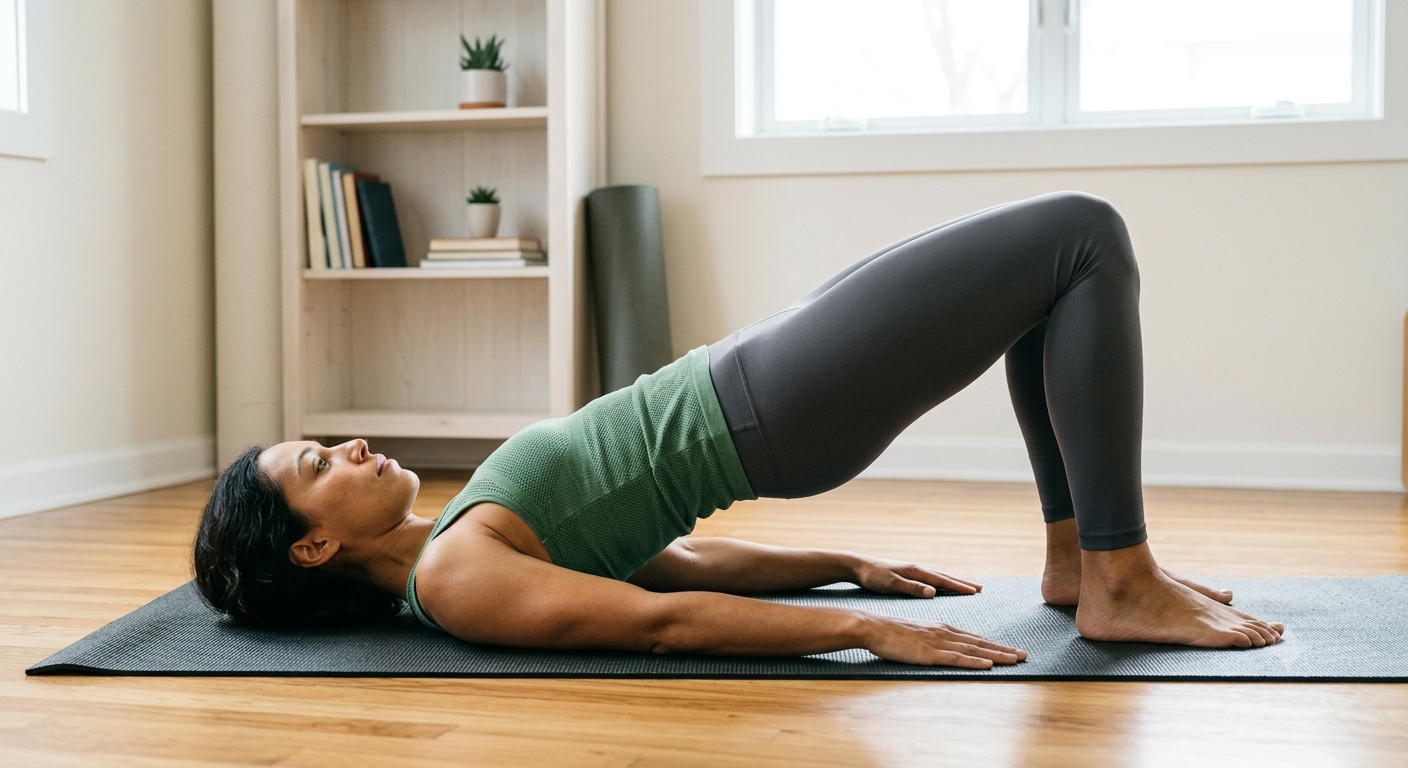
Glute bridges are also a great exercise that strengthens your gluteus maximus, which works to offset the anterior force from tight hip flexors. The workout itself consists of lying flat on your back, bent knees, and pushing up through your heels to bring your body in a line from shoulders to knees. Other examples of exercises to bolster your stability includes core- strengthening moves like planks, bird-dogs, or dead bugs. These exercises train the deeper muscles that control the way you hold your body up.
Just ensure you do them the right way so that you’re getting a full range of motion and not hurting your lower back.
Improve Daily Posture and Movement
If you keep the bad posture habit all day, exercise alone will not completely get rid of the anterior pelvic tilt.
– Get up and move every 30-60 minutes If you are used to sit a long time every day, try to get up from your chair and walk around or perform some simple stretching for your hips every 30-60 minutes. –
When you are standing: avoid arching your lower back, maintain your ears, shoulders, hips, knees and ankles in a line, and activate your core in a natural way. – Ergonomic of your workspace Your chair should be arranged so that you can keep your feet flat on the ground, your knees at about a 90 degrees angle, and your screen in the height of your eyes.
Common Mistakes to Avoid
Many people searching for how to fix anterior pelvic tilt expect immediate results, but posture correction takes time and consistency.
Another common mistake is focusing only on stretching the hip flexors while neglecting to strengthen the glutes and core muscles. If your core isn’t supporting the rest of your pelvis, the muscles will continue to push forward, no matter how loose your hip flexors become. Another mistake is tucking your pelvis in a forced or unnatural way all day.
Holding the muscles tightly like this for extended periods can actually create more muscle strain and pain, rather than help you improve posture naturally.
Forgetting to do warm-ups before exercise, using the wrong technique, or advancing too rapidly are all ways you could injure yourself as well.
When to Seek Professional Help
While some symptoms are alleviated with exercise and modifications in routine, it may be worthwhile to consult a physical therapist. The physical therapist evaluates your posture, muscles’ strength, range of motion of your joints and manner of movement to prepare a specialized therapy routine for you. If you suffer from substantial amount of pain, numbness, muscle weakness and walking difficulties along with anterior pelvic tilt you should see your doctor so they could determine and rule out the possibility of other cause of your condition. Never underestimate chronic lower back pain if it impacts your everyday activities or if your workouts do not provide you with the necessary relief.
Conclusion
Learning how to fix anterior pelvic tilt involves more than performing a few stretches. Long-term improvement usually requires strengthening weak muscles, improving flexibility, correcting daily posture, and reducing prolonged sitting. While progress may take several weeks or months, consistent exercise and healthy movement habits can gradually improve pelvic alignment, reduce lower back strain, and enhance overall mobility.
If symptoms are severe or fail to improve with self-care, consulting a qualified healthcare professional or physical therapist is the safest way to receive an accurate diagnosis and appropriate treatment plan.
Frequently Asked Questions
1. Can anterior pelvic tilt be corrected naturally?
Yes. Many mild to moderate cases improve through targeted stretching, strengthening exercises, posture correction, and reducing prolonged sitting. Consistency is essential for long-term results.
How Much Time Does It Take to Correct Anterior Pelvic Tilt?
The timeline varies depending on the severity of the condition, muscle imbalances, and how consistently you follow an exercise program. Some people notice improvement within several weeks, while others may require a few months.
3. What muscles should I strengthen for anterior pelvic tilt?
Strengthening the glutes, abdominal muscles, hamstrings, and deep core muscles is commonly recommended because these muscles help support a more neutral pelvic position.
4. Does sitting too much cause anterior pelvic tilt?
Prolonged sitting can contribute to tight hip flexors and weak glute muscles, both of which are associated with anterior pelvic tilt. Taking regular movement breaks can help reduce this risk.
5. Can anterior pelvic tilt cause lower back pain?
Yes. An excessive forward pelvic tilt may increase the curve of the lower back, placing additional stress on the lumbar spine and surrounding muscles, which can contribute to discomfort.
6. Should I wear a posture brace to fix anterior pelvic tilt?
A posture brace may provide temporary support in some situations, but it should not replace strengthening exercises and healthy movement habits. Long-term improvement depends on restoring proper muscle balance.
When Is It Time to See a Physical Therapist?
You should consider seeing a physical therapist if your symptoms persist despite regular exercise, your pain worsens, or you experience numbness, weakness, or difficulty performing everyday activities. A professional assessment can help identify the underlying cause and guide appropriate treatment.