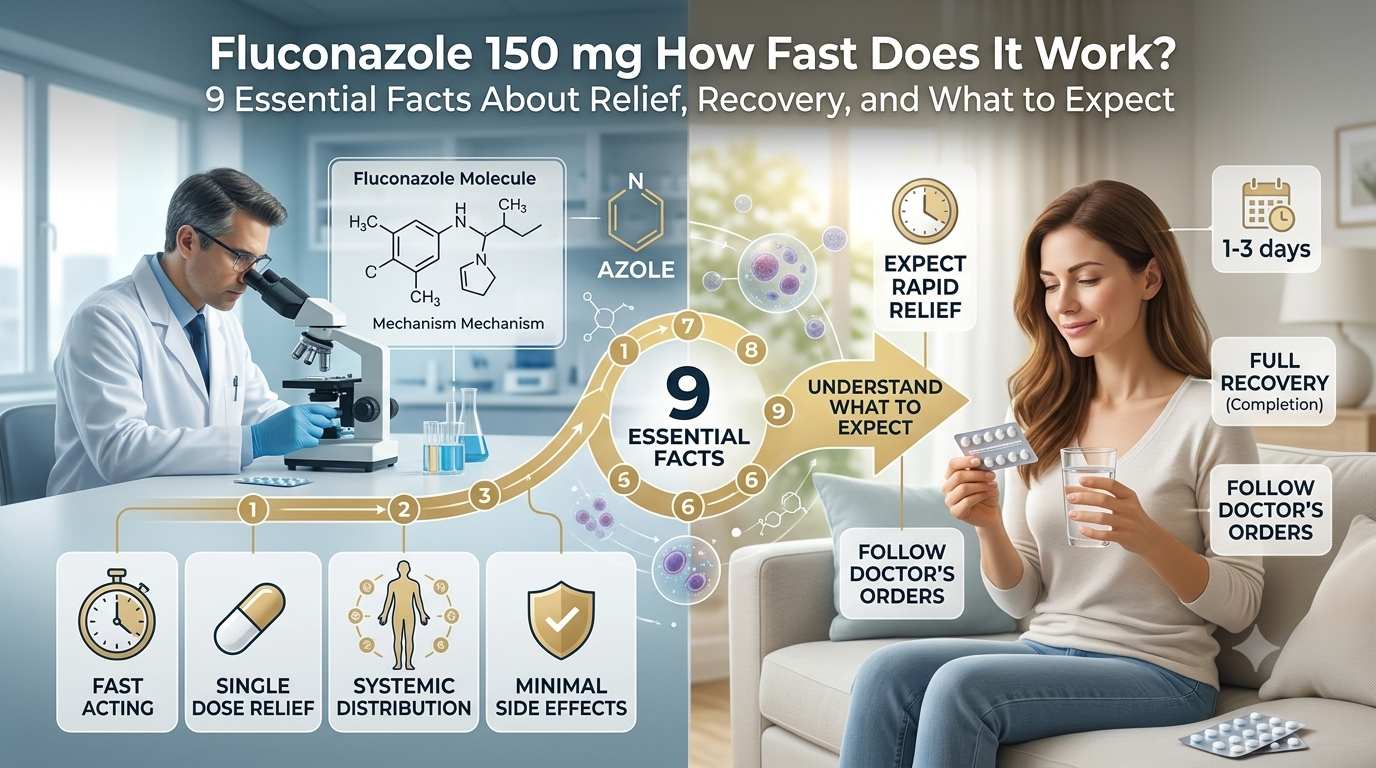
If you’ve recently taken a dose and are wondering fluconazole 150 mg how fast does it work, you’re not alone. “I took the pill yesterday, but my symptoms are still here! Is fluconazole not working?” is probably the most frequently asked question once a patient receives a prescription for a single 150mg tablet of fluconazole, especially if for a yeast infection. While fluconazole does start working to fight the infection internally within hours, it takes some time to see a reduction in symptoms.
The most uncomplicated infections start to improve from the very first day to 1-3 days of the first dose, and often relief can be felt as early as the first week.
Nevertheless, this is a tricky distinction between the drug starting to combat the infection internally, and your symptoms going away. A great number of people panic and assume fluconazole doesn’t work when they wake up still feeling itchy the day after they’ve taken the drug. This is untrue because fluconazole works long after the tablet has been absorbed into the bloodstream and your body needs time to decrease inflammation and repair infected tissue.
In this guide we explain how fluconazole acts on the organism, what the duration of the treatment is, and what may hinder healing. We also mention what signs warrant an evaluation by a physician.
What Is Fluconazole 150 mg?
Fluconazole, an antifungal (anti-yeast) drug, is used to treat specific fungal infections, including the infections caused by Candida yeast. Fluconazole is in a class of medications known as triazole antifungals. It does not directly kill yeast; rather, it interferes with the yeast’s ability to produce something necessary in its cell membrane. When the membrane doesn’t form, the yeast cannot grow or function, and ultimately, dies.
The medication can be used to treat many fungal infections throughout the body. In adults, however, the single oral 150mg dose of fluconazole is most frequently prescribed to treat uncomplicated yeast infections in the vagina. Different dosages and longer treatment periods are prescribed according to the type and severity of the yeast infection.
Common conditions treated with fluconazole include common fungal infections:
- Vaginal yeast infections
- Oral thrush
- Esophageal candidiasis
- Certain skin fungal infections
- Some systemic fungal infections in people with weakened immune systems
The amount of time required for improvement depends not only on the medication itself but also on the location and severity of the infection.
Fluconazole 150 mg How Fast Does It Work?
The short answer is that fluconazole 150 mg starts working within a few hours of taking it, although symptom relief usually isn’t noticeable right away.12 to 24 hours later. When you ingest the fluconazole 150mg tablet, it’s quickly absorbed by the digestive system and gets into your bloodstream, where the levels in the body get to be the highest within one or two hours. Then, fluconazole travels through the blood to other parts of your body where it goes to work in your fungal tissues and begins to prohibit the yeast growth. That being said, the yeast must be cleared out, and your inflammation and redness must decrease, before your itching and irritation decreases.
A typical recovery timeline looks like this:
| Time After Taking Fluconazole | What Usually Happens |
| Within 1–2 hours | Medication reaches high levels in the bloodstream. |
| First 24 hours | The medicine begins slowing fungal growth, though symptoms may remain similar. |
| Days 1–3 | Many people begin noticing reduced itching, burning, and irritation. |
| Days 4–7 | Most uncomplicated infections continue improving significantly. |
| Up to 14 days | Some severe infections may require additional time or further evaluation if symptoms persist. |
Everyone heals at a different pace, so these timeframes are general expectations rather than strict rules.
How Does Fluconazole Actually Work?
To understand fluconazole 150 mg how fast does it work, it helps to know what happens inside the body after taking the medication.
An essential component of yeast cell membrane is made of something known as ergosterol, and fluconazole works by suppressing an enzyme which in fact synthesises this component. Yeast thus becomes incapable of sustaining its protective outer membrane and fails to flourish and multiply effectively. Just as painkillers tend to cause results in a matter of minutes, antifungal drugs tend to put a halt to the infection at its origin by degrees, after which, when the infection starts to be fought back, your immune system is able to kick into action, clear the rest and also to commence tissue repair. For this reason, both infection cessation and the healing of the ensuing inflammation takes days to happen, rather than minutes.
Why Symptoms Don’t Disappear Immediately
One of the biggest misconceptions about antifungal medication is expecting complete relief within a few hours.
Even after fluconazole begins attacking the yeast, the irritated tissues still need time to heal. Think of it like treating a skin wound. Eliminating the cause of the injury does not instantly remove redness or tenderness.Your body still requires time to recover fully.
Several factors contribute to ongoing symptoms during the first few days:
- Inflamed tissue remains sensitive after the yeast starts dying.
- The immune system continues clearing fungal cells.
- Damaged skin and mucous membranes gradually repair themselves.
- Residual discharge may take several days to resolve completely.
That’s why you might still itch and be uncomfortable the second day if the treatment is working as expected.
What Symptoms Usually Improve First?
Each person will recover differently but in general, you can expect symptoms to resolve in a certain sequence: Itching is usually the first thing that will get better, followed by burning. The swelling should start going down a few days later and discharge may be the last thing to stop.
A typical symptom progression may look like this:
First Improvement
- Less itching
- Reduced burning during daily activities
Next Stage
- Decreased redness
- Less swelling
- Improved comfort while sitting or walking
Final Stage
- Normal discharge returns
- Skin irritation heals
- Remaining tenderness disappears
People with more severe infections may experience slower improvement, even when the medication is effective.
How Long Does Fluconazole Remain in Your Body?
Another reason fluconazole 150 mg how fast does it work can be confusing is that the medication stays active much longer than many people realize.
Fluconazole has a fairly long half-life Fluconazole has a long half-life of around 30 hours in healthy adults, which means that the drug stays in your body for a few days after you’ve taken a single dose. Instead of working for a few hours, the medication lingers at a high level, enough to keep fungal growth inhibited with one dose.
This lingering ability is why a single 150 mg tablet can often effectively treat simple yeast infections of the vagina. The lingering isn’t magic and symptoms don’t vanish the second the medication’s started and can take days to improve because healing still depends on how long it takes the infection to clear up and how much inflammation it already caused.
Does Everyone Improve at the Same Speed?
No. Recovery varies widely between individuals.
The good news is most individuals notice a reduction in symptoms anywhere between 1-3 days, though a full week may be needed to pass before significant relief. Factors that affect your individual recovery are: your overall health, your immunity, how severe the infection is, how often you’ve had yeast infections in the past, if you are pregnant or diabetic, recently took antibiotics, or if symptoms aren’t due to a yeast infection at all.
Because of these variables, you cannot truly use your friend as a reference: even though she took the same prescribed pill as you correctly, she might feel symptom free after two days, whereas it takes nearly a week for relief for you.
Factors That Affect How Quickly Fluconazole Works
Although many people ask fluconazole 150 mg how fast does it work, there is no single answer that applies to everyone. The medication follows the same basic process in the body, but several factors determine how quickly symptoms begin improving.
Severity of the Infection
An mild infection heals quicker then a 2-3 week old one. When you have much inflammation, swelling, redness etc., it take your body more time to clear up the yeast even after medication.
The Type of Candida
For a straightforward vaginal yeast infection with Candida albicans, you’ll typically take one 150-mg tablet. Some rare Candida species are intrinsically more resistant to fluconazole.
Your Immune System
The drug works with your body’s defenses to eliminate the infection. If you have a weakened immune system, your body may be less efficient at clearing fungal cells and it may take longer to recover.
Other Medical Conditions
Some medical conditions including diabetes, if the blood sugar levels are not well managed, may increase chances of yeast overgrowth and also cause it to be hard to cure the infection. Any changes in the body with hormonal issues, recent usage of any form of antibiotics and pregnancy could have an impact too.
Whether the Diagnosis Is Correct
Itchy, burning, and unusual discharge isn’t always a sign of a yeast infection. Allergies, bacterial infections, eczema, STIs, and a number of other skin conditions can present with these signs. If it isn’t a yeast infection, fluconazole will not help.
What to Expect After Taking Fluconazole 150 mg
Understanding the normal recovery timeline can prevent unnecessary worry. Many people expect immediate relief, but the healing process is gradual.
During the First 24 Hours
The medication is already circulating through your bloodstream and beginning to stop fungal growth. However, symptoms often remain unchanged because the inflamed tissues have not yet recovered.
You may still notice:
- Itching
- Burning
- Irritation
- Mild swelling
- Abnormal discharge
This does not usually mean the medication has failed.
Days Two and Three
For many people, this is when noticeable improvement begins. The itching often becomes less intense, burning gradually decreases, and everyday activities become more comfortable.
Some discharge may still be present because the body is clearing dead yeast cells and repairing irritated tissue.
Days Four Through Seven
Most uncomplicated infections continue improving during this period. Redness and swelling often decrease significantly, and many people feel almost back to normal by the end of the first week.
Complete healing may take slightly longer if the infection was severe.
Beyond One Week
If symptoms remain unchanged after about seven days—or if they become worse instead of better—it is important to contact a healthcare provider. Persistent symptoms may indicate a resistant yeast strain, another medical condition, or a more complicated infection that requires additional treatment.
Signs That Fluconazole Is Working
Sometimes improvement is gradual enough that people fail to notice it day by day.
Common signs the medication is working include:
- Less itching than before treatment
- Reduced burning sensation
- Decreasing redness
- Less swelling
- More comfortable urination
- Reduced discomfort during normal activities
- Gradual return of normal vaginal discharge
Improvement often happens steadily rather than all at once.
When One Dose May Not Be Enough
Although a single 150 mg tablet is commonly prescribed for uncomplicated vaginal yeast infections, some situations require additional treatment.
Healthcare providers may recommend another dose or a longer treatment plan if:
- The infection is classified as severe.
- Symptoms return shortly after improving.
- The infection is recurrent.
- The yeast species is less responsive to fluconazole.
- The patient has certain medical conditions that increase the risk of persistent infection.
It is important not to take additional doses unless instructed by your healthcare provider.
Common Mistakes That Can Delay Recovery
People often assume the medication has failed when recovery is actually being slowed by other factors.
One common mistake is expecting symptoms to disappear overnight. Because the medicine treats the infection rather than simply masking symptoms, healing naturally takes time.
Another mistake is self-diagnosing every episode of itching as a yeast infection. Using antifungal medication when the problem is something else can delay proper treatment.
Some individuals also continue using scented soaps, vaginal deodorants, bubble baths, or other irritating products during recovery. These products may worsen irritation even after the infection begins improving.
Wearing tight, non-breathable clothing for long periods can also trap moisture and create an environment that favors yeast growth. Loose-fitting cotton underwear generally allows better airflow while healing.
Why Symptoms May Feel Worse Before They Improve
Most people do not experience worsening symptoms after taking fluconazole. However, irritation may feel similar during the first day because inflammation has not yet had time to decrease.
If symptoms become dramatically worse, especially with severe pain, fever, spreading redness, foul-smelling discharge, or significant swelling, seek medical evaluation promptly. These findings may suggest another condition requiring different treatment.
Can You Have Sex While Waiting for Fluconazole to Work?
There isn’t a strict rule that prohibits sexual activity, but many healthcare providers advise waiting until your symptoms are gone.
There are several reasons for this recommendation:
- Friction may increase irritation.
- Healing tissues are more sensitive.
- Sexual activity can be uncomfortable.
- Symptoms may temporarily worsen because of additional irritation.
Waiting until treatment is complete and symptoms have resolved is generally more comfortable and may help support healing.
Lifestyle Tips That May Support Recovery
While fluconazole treats the fungal infection itself, healthy habits may help reduce irritation as the body heals.
Helpful practices include:
- Keeping the affected area clean and dry is an important part of preventing recurrent yeast infections.
- Wearing breathable cotton underwear.
- Avoiding unnecessary scented hygiene products.
- After exercise or swimming, change out of damp clothing promptly.
- Managing blood sugar carefully if you have diabetes.
- Following your healthcare provider’s treatment instructions exactly as prescribed.
These measures do not replace medication but may reduce factors that contribute to continued irritation or recurrent infections.
When Should You Contact a Healthcare Provider?
Most uncomplicated yeast infections improve steadily after treatment. However, medical advice should be sought if:
- Symptoms have not improved after about seven days.
- Symptoms return within two months.
- You experience frequent yeast infections.
- Fever or severe pelvic pain develops.
- You are pregnant and develop symptoms of a yeast infection.
- You have diabetes or a weakened immune system and symptoms are severe.
- The discharge has a strong unpleasant odor or unusual color.
- You are unsure whether your symptoms are actually caused by a yeast infection.
Persistent symptoms do not always mean fluconazole failed. Sometimes another diagnosis or additional testing is needed to identify the true cause.
Frequently Asked Questions
1. Fluconazole 150 mg how fast does it work for a yeast infection?
If you’re wondering fluconazole 150 mg how fast does it work, the medication begins working shortly after you take it, but symptom relief usually isn’t immediate. Many people notice less itching and burning within 24 to 72 hours, while complete improvement often takes up to seven days. More severe infections may require additional time or follow-up treatment.
2. Why do I still have symptoms one day after taking fluconazole?
It’s normal to have ongoing symptoms during the first 24 hours. Although fluconazole starts stopping fungal growth soon after it’s absorbed, your body still needs time to reduce inflammation and repair irritated tissue. A lack of immediate relief doesn’t necessarily mean the medication isn’t working.
3. Can one 150 mg fluconazole tablet cure a yeast infection?
For many uncomplicated vaginal yeast infections caused by Candida albicans, a single 150 mg tablet is enough. However, severe infections, recurrent infections, or infections caused by less common Candida species may require additional doses or a different treatment plan prescribed by a healthcare provider.
4. What should I avoid while fluconazole is working?
During recovery, it’s best to avoid scented soaps, bubble baths, vaginal deodorants, and other products that may irritate sensitive tissue. Wearing breathable cotton underwear and avoiding prolonged moisture can also help create a healthier environment while the infection clears.
5. When should I contact a doctor if fluconazole isn’t helping?
If your symptoms haven’t improved after about seven days, become significantly worse, or return soon after treatment, you should contact a healthcare provider. Persistent symptoms may indicate a resistant yeast strain, another type of infection, or a condition unrelated to yeast.
6. Can fluconazole treat every type of fungal infection?
No. While fluconazole is effective against many Candida infections, it doesn’t treat every fungal infection. Some fungi are naturally resistant, and certain infections require different antifungal medications or longer treatment courses. The correct medication depends on the specific organism causing the infection.
7Should I Take Another Fluconazole Tablet If My Symptoms Don’t Improve Right Away?
You should not take an additional dose unless your healthcare guide provider specifically recommends it. Taking extra medication without medical guidance may not improve recovery and could delay the correct diagnosis if your symptoms are caused by something other than a yeast infection.
Conclusion
Understanding fluconazole 150 mg how fast does it work can help you set realistic expectations and avoid unnecessary concern during recovery. Although the medication begins working within hours of taking it, symptom relief usually develops gradually over the next one to three days, with most uncomplicated yeast infections improving substantially within a week. Healing takes time because your body must not only eliminate the yeast but also repair the inflammation caused by the infection.
If your symptoms steadily improve, the treatment is likely working as expected. However, if they persist beyond a week, worsen significantly, or keep returning, it’s important to seek medical evaluation rather than assuming another dose will solve the problem. Receiving the correct diagnosis is the best way to ensure effective treatment and prevent recurring symptoms.