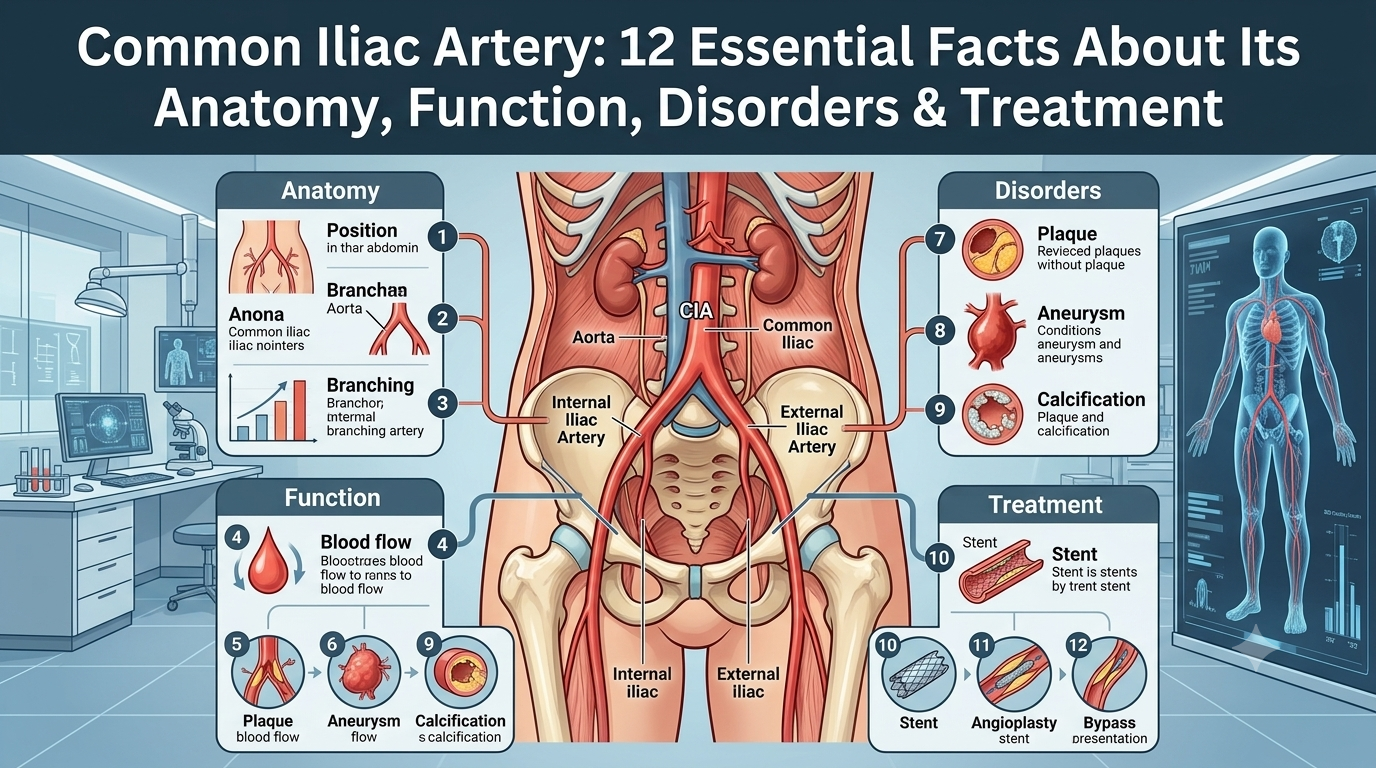
Although the common iliac artery is a crucial part of your body’s vascular system, you likely will never become acquainted with it unless it’s noted during a scan or you develop a vascular disorder. These bilateral arteries reside in the depths of the pelvis and are the “road from the abdominal aorta to the rest of the body” supplying blood to all of your abdominal organs and down to your legs and feet. The abdominal organs, muscles, and tissue all need blood to survive and thrive.
In fact, without properly functioning common iliac arteries you will not be receiving enough oxygenated blood down below.
The common iliac artery isn’t as well-known as the arteries of the extremities but knowledge about it is incredibly beneficial to medical students, healthcare professionals, patients suffering from vascular disorders and for anyone who’s ever had a test result or vascular procedure for an arterial blockage or an aneurysm. This overview covers the structure, function, associated organs, and importance of the common iliac artery, setting the stage for later sections on diseases, diagnosis, and treatment.
Why the Common Iliac Artery Matters
With each beat of the heart, blood is pushed into the aorta-which happens to be the largest artery in the entire body. The aorta branches into two large vessels-right and left common iliac arteries-at approximately the lower limit of the abdomen to direct oxygenated blood towards the legs and pelvis. As it is at a junction of blood flow, it is prone to narrowing, becoming occluded, or getting damaged and thus restricting blood flow into multiple parts of the body.
Common iliac artery problems can lead to leg pain, poor walking distance, impaired wound healing, and in severe instances can even lead to loss of life.
The artery also plays a vital role as a landmark in various operations of the abdomen, pelvis, orthopaedics, vascular and spinal surgery where the exact location is to be identified to prevent inadvertent damages.
Understanding the Common Iliac Artery
The human body has two common iliac arteries:
- Right common iliac artery
- Left common iliac artery
The aortic bifurcation is a point from where both arteries rise; a segment located typically at the L4 or fourth lumbar vertebral level. Some individual variability is considered normal. Each artery progresses outward down several centimeters prior to subdividing in turn in two other arteries:
- Internal iliac artery
- External iliac artery
These branches of arteries carry blood to the pelvis as well as lower parts of body in general. Even though the length of common iliac arteries isn’t too big, in comparison to the most of the other large arteries, a considerable flow of blood passes through these vessels per minute.
Anatomy of the Common Iliac Artery
Knowledge of the anatomy of the vascular system provides rationale for why this particular artery is implicated in the pathogenesis of a variety of vascular disease and is therefore the focus of diagnostic imaging investigations.
Origin
The origin of the common iliac artery is at the bifurcation of the abdominal aorta. It is where the common split is the part of abdominal aorta that moves through your body before splits in your body for the left and right common iliac arteries. The common iliac arteries split in your abdominal and begin blood flow to the legs and the pelvis.
Course
After branching from the aorta, each artery travels diagonally downward.
Although both arteries follow similar paths, they are not perfectly symmetrical.
The right common iliac artery is generally slightly longer because the abdominal aorta lies slightly left of the body’s midline before dividing.
The arteries pass in front of the fifth lumbar vertebra and the sacroiliac joint before reaching their point of division.
Termination
Each common iliac artery ends by dividing into two major arteries.
Internal Iliac Artery
The internal iliac artery primarily supplies:
- Pelvic organs
- Urinary bladder
- Rectum
- Reproductive organs
- Gluteal muscles
- Pelvic walls
For childbirth, pregnancy, and surgery to the pelvis, branches are particularly essential as they deliver blood to reproductive structures.
External Iliac Artery
The external iliac artery continues toward the leg.
As it passes beneath the inguinal ligament, it becomes the femoral artery, the primary artery supplying the lower limb.
Structure of the Arterial Wall
Like other large arteries, the common iliac artery contains three distinct layers.
| Layer | Function |
| Tunica intima | Smooth inner lining that allows blood to flow efficiently |
| Tunica media | Thick muscular layer that provides strength and elasticity |
| Tunica adventitia | Outer connective tissue layer that protects and supports the artery |
Healthy arterial walls expand slightly with each heartbeat before returning to their original diameter.
As people age or develop vascular disease, these layers may become stiff, weakened, or narrowed.
Location of the Common Iliac Artery
The common iliac artery lies deep within the lower abdomen, making it impossible to feel from outside the body.
It is located near several important anatomical structures, including:
- Lumbar vertebrae
- Iliac veins
- Ureters
- Sacroiliac joints
- Inferior vena cava
- Sympathetic nerve plexuses
With these intimate relations diseases of organs in close proximity can also cause complications for the artery, whereas interventions in vascularity can pose a serious risk to neighboring organs.
Blood Supply Provided by the Common Iliac Artery
For the most part, the common iliac artery doesn’t directly deliver to many different parts of the body; instead, it is more of an arterial freeway that diverts blood down two different roads.
Through its branches, it ultimately supplies:
- Pelvic muscles
- Hip region
- Buttocks
- Urinary system
- Reproductive organs
- Portions of the colon and rectum
- Lower abdominal wall
- Entire lower limbs
Your ability to step, squat, climb, and run relies on a consistent flow of blood to the muscles and tissues involved.
Function of the Common Iliac Artery
The main function of the common iliac artery is to deliver blood that is rich in oxygen from the aorta to the legs and pelvis.
Delivering Oxygen
To generate energy all the body needs oxygen. This oxygen comes into the tissues, muscle, nerve, bone and organs from blood supplied by the common iliac artery. In the absence of proper circulation, tissues can cease to work properly or even become permanently damaged.
Providing Nutrients
Blood carries glucose, amino acids, vitamins, minerals, hormones, and immune cells.
These nutrients support:
- Muscle contraction
- Nerve signaling
- Tissue repair
- Organ function
- Growth
- Healing after injury
Removing Waste Products
Waste is the main role of your veins but before you get waste moving you first need to improve arterial flow through healthy blood flow. In the best cases healthy blood flow can enable tissues to trade out carbon dioxide and other waste products to get hold of oxygen from healthy circulation before you blood enters into the veins to leave.
Supporting Physical Activity
During exercise, muscles demand significantly more oxygen.
The common iliac artery adapts by delivering increased blood flow to the legs through the external iliac and femoral arteries.
This response allows activities such as:
- Walking
- Running
- Cycling
- Climbing stairs
- Weight training
Reduced blood flow through this artery may cause exercise-induced leg pain known as claudication, which is discussed later in this guide.
Relationship to Nearby Structures
One is due to its close proximity to several organs and other blood vessels.
Iliac Veins
One iliac artery accompanies an iliac vein. The iliac veins return the oxygen-deprived blood to the heart. Since the iliac arteries and iliac veins lie adjacent to one another, procedures carried out on either structure require care to avoid injuring the accompanying vessel.
Ureters
The ureters pass quite close to the common iliac arteries on their way down to the bladder from the kidneys. This relationship needs to be appreciated in pelvic surgery.
Spine
The artery is right anterior to the lower lumbar spine. This is why the vascular injury is usually carefully avoided by surgeons in the region of the spine located on anterior part of spine.
Pelvic Organs
The bladder, reproductive organs, and portions of the intestines all depend on branches arising from the common iliac artery.
Damage to these branches can affect blood supply to multiple organs simultaneously.
Anatomical Variations of the Common Iliac Artery
Although textbooks describe a standard pattern, anatomical variations are not uncommon.
Examples include:
- Slight differences in artery length
- Variation in branching angles
- High or low aortic bifurcation
- Rare congenital abnormalities
- Differences in vessel diameter
Most anatomical variations never cause symptoms and are discovered incidentally during CT scans, MRI studies, or surgery.
Recognizing these differences helps radiologists and surgeons plan procedures safely while reducing the risk of complications.
Clinical Importance of the Common Iliac Artery
This central hub has great importance in clinical medicine, as this artery is like a main highway that supplies blood to lower half of your body. Even minor abnormalities in its structure may result in circulation problems to lower limbs, mobility impairment and affect the functioning of your internal organs. Hence, doctors often examine the common iliac artery in the case of unusual pain in your leg, diminished pulses and other symptoms of diminished circulation.
Additionally, this artery is usually evaluated before undertaking any procedure to your spine, pelvis, lower extremities or abdomen.
Fortunately, advanced imaging tests like MR angiography, CT angiography and doppler sonography permit the doctors to get a clear image of the common iliac artery and help detect its narrowing, aneurysm, abnormal arrangement or congenital variations before they cause damage to your body. In the second section of this tutorial, we shall review the common conditions of the common iliac artery, their symptoms and modern treatment techniques.
Common Disorders of the Common Iliac Artery
The common iliac artery, while a rather short vessel, can suffer from many of the same diseases and conditions as the other major arteries. Some of these conditions develop slowly over the course of several years; others appear very quickly and require emergency treatment. Familiarity with these conditions should alert patients to the potential signs and encourage immediate attention.
Atherosclerosis of the Common Iliac Artery
Atherosclerosis is the most prevalent disease of the common iliac artery. The disease develops as a result of deposits of fatty substances, cholesterol, inflammatory cells, and calcium along the inner walls of the artery to create plaques. Over time, these plaques progressively narrow the artery, decreasing blood flow into the legs and pelvis, and in some severe instances completely occluding the artery.
Risk Factors
Several risk factors may contribute to the development of atherosclerosis, including:
- Smoking or tobacco use
- High blood pressure
- High cholesterol
- Diabetes
- Obesity
- Physical inactivity
- Increasing age
- Family history of cardiovascular disease
- Chronic kidney disease
Most people have more than one risk factor, and the effects often add up over time.
Symptoms
Early-stage disease may not cause noticeable symptoms because the body can sometimes compensate by using smaller collateral blood vessels.
As narrowing becomes more severe, symptoms may include:
- Pain in the buttocks, hips, thighs, or calves during walking (claudication)
- Leg fatigue after mild activity
- Cold feet
- Numbness or tingling
- Slow-healing wounds on the legs or feet
- Reduced pulses in the groin or lower limbs
Men with advanced disease affecting the pelvic circulation may also experience erectile dysfunction, particularly when blood flow through both common iliac arteries is significantly reduced.
Common Iliac Artery Aneurysm
An aneurysm develops when part of an artery weakens and bulges outward.
Compared with abdominal aortic aneurysms, isolated common iliac artery aneurysms are less common, but they remain clinically important because they may enlarge silently for years.
Why Do Aneurysms Develop?
The artery wall can weaken because of:
- Atherosclerosis
- Age-related degeneration
- Connective tissue disorders
- Previous infections (rare)
- Trauma
- Genetic factors
Symptoms
Small aneurysms usually cause no symptoms and are often discovered incidentally during imaging performed for another reason.
Larger aneurysms may produce:
- Deep pelvic pain
- Lower abdominal discomfort
- Back pain
- Groin pain
- Pressure on nearby nerves or veins
Emergency situation The consequences of a burst aneurysm are serious and you would need emergency treatment. An aneurysm can rupture, leading to profuse internal hemorrhage, a sudden burst of abdominal or back pain, light-headedness, fainting and collapse.
Monitoring and Treatment
The treatment is based on the size of the aneurysm, rate of expansion, presence of symptoms, and the health of the patient. Small, asymptomatic, and stable aneurysms may simply be watched with regular follow up scans. Large aneurysms, symptomatic aneurysms, or aneurysms that continue to grow may be repaired through either open surgical or endovascular means, dictated by the patient’s anatomy and risk profile.
Common Iliac Artery Occlusion
An occlusion is a complete blockage of the artery.
Unlike gradual narrowing, a complete blockage can significantly reduce blood flow beyond the obstruction.
Causes
Occlusion may result from:
- Advanced atherosclerosis
- Blood clots
- Embolism from another artery
- Previous vascular procedures
- Severe trauma
Symptoms
Symptoms can differ based on how rapidly the blockage develops.
Gradual occlusion may allow collateral blood vessels to compensate, causing milder symptoms.
Acute occlusion often causes:
- Sudden severe leg pain
- Cold, pale skin
- Loss of pulses
- Weakness
- Numbness
- Difficulty moving the affected leg
This condition requires immediate medical evaluation because prolonged loss of blood flow can permanently damage muscles and nerves.
Common Iliac Artery Stenosis
This stenosis (partial blockage) is a condition in which your common iliac artery gradually gets narrower over time. Typically, patients suffering from common iliac artery stenosis only complain of claudication (discomfort with activity), and that too, with long distances. When the condition becomes severe, the patient may experience symptoms even with brief exercise, and in extremely advanced cases, even at rest.
Common Iliac Artery Dissection
A dissection occurs when a tear develops in the artery’s inner lining.
Blood flows into the vessel wall, causing the different layers of the wall to separate and forming a false channel. While they are most frequent in the aorta, they can also be encountered in the common iliac artery (often as a consequence of injury or a extension from an aortic dissection).
Possible Symptoms
- Sudden pelvic pain
- Lower back pain
- Groin pain
- Leg pain
- Reduced circulation
Because symptoms can resemble other serious conditions, imaging is essential for diagnosis.
Traumatic Injury to the Common Iliac Artery
Because the common iliac artery is found deep in the pelvis it is relatively rare to be injured, and in those cases it usually requires a severe trauma.
Possible causes include:
- Motor vehicle collisions
- Penetrating injuries
- Pelvic fractures
- Surgical complications
Significant arterial injury can lead to life-threatening bleeding or reduced blood flow to the lower limbs, requiring emergency vascular repair.
Compression Syndromes
Sometimes the pelvic blood vessels may get compressed due to adjacent pelvic organs or masses. Usually it is a venous compression, but rarely it can occur in common iliac artery as well that might lead to impaired circulation or make surgical intervention difficult. Management varies from observation to medication and even surgical intervention depending on the causative factor.
Signs and Symptoms of Common Iliac Artery Disease
Symptoms depend on the specific disorder, the severity of reduced blood flow, and whether one or both arteries are affected.
Common warning signs include:
| Symptom | Possible Reason |
| Pain while walking | Reduced blood flow during exercise |
| Cold feet | Poor circulation |
| Leg weakness | Inadequate oxygen delivery |
| Buttock pain | Pelvic artery narrowing |
| Groin discomfort | Aneurysm or arterial disease |
| Non-healing wounds | Severe peripheral artery disease |
| Reduced pulses | Arterial narrowing or blockage |
| Rest pain | Advanced arterial disease requiring urgent evaluation |
Again, remember the common symptoms could also indicate a lot of other problems, a health provider would know whether you are suffering from something involving the common iliac artery.
How Doctors Diagnose Common Iliac Artery Problems
Because the common iliac artery lies deep within the body, imaging plays a central role in diagnosis.
Medical History and Physical Examination
The evaluation usually begins with a discussion of symptoms, medical history, smoking history, exercise tolerance, and cardiovascular risk factors.
During the examination, a clinician may assess:
- Groin pulses
- Foot pulses
- Skin temperature
- Skin color
- Presence of ulcers
- Blood pressure differences between limbs
These results help your healthcare provider decide whether further testing is necessary.
Ankle-Brachial Index (ABI)
The ABI tests blood pressure in the ankle against blood pressure in the arm to evaluate the ankle-brachial index (ABI) test for peripheral artery disease. An abnormal ABI may suggest Peripheral Artery Disease in the Common Iliac Artery or another artery of the leg. Since the test is fast, painless, and noninvasive, the ABI is commonly done as part of a medical examination when the circulation is suspected to be impaired.
Doppler Ultrasound
Doppler ultrasound uses sound waves to evaluate blood flow through arteries.
It can identify:
- Narrowing
- Reduced blood velocity
- Blockages
- Abnormal blood flow patterns
Although ultrasound is extremely useful, visualizing the common iliac artery may be challenging in some patients because of its deep location and overlying bowel gas.
CT Angiography (CTA)
CT angiography provides highly detailed cross-sectional images of the arteries after intravenous contrast is administered.
CTA can show how CT angiography evaluates blood vessels, including:
- Aneurysms
- Plaque buildup
- Stenosis
- Occlusions
- Vessel anatomy before surgery
It is widely used when planning endovascular or open vascular procedures.
MR Angiography (MRA)
Magnetic resonance angiography (MRA). Another imaging technique to visualize the common iliac artery that is usually associated with no ionizing radiation to the patient. This might be a useful choice in the setting of a patient needing repeat imaging or a patient to whom CT contrast can’t be administered.
Conventional Angiography
Catheter-based angiography remains a valuable option for both diagnosing and treating certain conditions.It is a test in which contrast dye is injected directly into the arteries of the body while obtaining X-ray pictures. It has the advantage that a treatment-a stent or a balloon-may be delivered at the same time if one of the arteries narrows significantly.
Treatment Options for Common Iliac Artery Disease
Treatment depends on the underlying condition, its severity, the patient’s symptoms, and overall health.
Lifestyle Changes
For early atherosclerotic disease, lifestyle modification is a cornerstone of care. Healthcare providers often recommend:
- Quitting smoking
- Following a heart-healthy eating pattern
- Engaging in regular physical activity as tolerated
- Managing blood pressure
- Controlling diabetes
- Achieving or maintaining a healthy weight
These measures can help slow disease progression and improve cardiovascular health overall.
Medications
Depending on the diagnosis, medications may include:
- Antiplatelet medications to reduce the likelihood of developing blood clots
- Cholesterol-lowering medications, such as statins
- Blood pressure medications
- Diabetes treatments to improve blood sugar control
Medication choices should always be guided by a qualified healthcare professional based on an individual’s medical history.
Endovascular Procedures
Minimally invasive treatments have become a common option for many common iliac artery disorders.
These procedures may involve:
- Balloon angioplasty to widen a narrowed artery
- Stent placement to help keep the artery open
- Endovascular aneurysm repair (EVAR) in selected cases involving aneurysms
These methods make the recovery quick, due to tiny incisions by using a catheter-like structure. Though it can not be used for every patient and there are some follow-up tests.
Open Surgery
Open surgical repair may be recommended for:
- Large aneurysms
- Complex arterial blockages
- Traumatic injuries
- Anatomical situations not well suited to endovascular treatment
Procedures can include bypass grafting, aneurysm repair, or reconstruction of the common iliac artery, depending on the specific condition.
Recovery and Follow-Up
The outcome depends upon treatment The patients will need regular surveillance with follow-up scans and control of risk factors in patients on long term medication to avoid arterial problems in the future. The last section of the guide on Prevention, Long-Term Outlook, Common Misconceptions, Short Summary, FAQ, Article Ideas, and References.
Preventing Common Iliac Artery Disease
Some common conditions of the common iliac artery cannot be prevented, such as congenital variations in anatomy, several connectivetissue diseases, and trauma. In fact, most people who develop atherosclerosis and peripheral artery disease had lifestyle choices that contributed. The best approach to preventarterial disease is to livea healt hyaver aall one’s life.
Quit Smoking
Smoking remains the most potent risk factor for damage to the common iliac artery and to other vessels throughout the body. Tobacco-related chemicals cause inflammation, damage the inner walls of arteries and build plaque, and increase blood clotting. People who quit smoking can lower the chances of developing these complications, even if they smoked for decades.
Control Blood Pressure
Blood pressure has an effect of stress on artery walls, causing it over a period of time to produce atherosclersis and possibly promote growth of an aneurysm in prone individuals. Frequent assessment and treatment for your blood pressure are part of the management of your vascular health.
Manage Cholesterol
High LDL (“bad”) cholesterol can promote plaque in the walls of the arteries. A heart-healthy eating plan, regular physical activity and cholesterol-lowering medicines (when recommended) can help to decrease your risk.
Keep Diabetes Under Control
Chronically high blood sugar damages blood vessels all over the body. Effectively managing diabetes helps reduce the risk of peripheral artery disease and other heart problems.
Stay Physically Active
Physical activity regularly helps you promote healthy circulation and healthy blood vessels and it also helps to maintain cholesterol, blood pressure and your weight in balance.Most adults can benefit from regular moderate physical exercise.Those that have any sign of arterial condition should speak with a doctor about a suitable programme of physical activity.
Eat a Heart-Healthy Diet
Consume a diet with an emphasis on vegetables, fruits, whole grains, beans, lentils, fish, lean protein, and good fats can promote good health throughout life.
Eating less food with saturated fats, trans fats, more sodium, and sweeteners can help reduce the risks of heart diseases.
Attend Regular Medical Checkups
Medical care can help health professionals screen for risk factors like high blood pressure, high cholesterol and diabetes while supporting overall cardiovascular health and disease prevention before they progress into serious vascular disease. Individuals with a family history of aneurysms or heart disease may need to be monitored more closely as suggested by a doctor.
Living With Common Iliac Artery Disease
However, having common iliac artery disease does not guarantee surgery is in order. Patients with mild to moderate disease may be treated successfully through lifestyle modifications, medications and follow-up. For patients treated with angioplasty, stenting or surgery, continuous monitoring will also be crucial. Follow-up care ensures proper blood flow is restored and arteries remain clear.
Patients are often encouraged to:
- Take medications exactly as prescribed.
- Keep follow-up imaging appointments.
- Continue regular physical activity if medically appropriate.
- Monitor for new symptoms, such as worsening leg pain or non-healing wounds.
- Maintain healthy lifestyle habits to reduce future cardiovascular risk.
Successful long-term management depends on treating the underlying causes of vascular disease rather than focusing only on the affected artery.
Possible Complications
Without appropriate treatment, diseases affecting the common iliac artery may lead to serious complications.
Potential complications include:
| Condition | Possible Complication |
| Severe stenosis | Chronic reduced blood flow to the legs |
| Complete occlusion | Acute limb ischemia |
| Aneurysm | Rupture with life-threatening internal bleeding |
| Advanced peripheral artery disease | Poor wound healing and tissue damage |
| Untreated atherosclerosis | Increased risk of cardiovascular disease elsewhere in the body |
Early diagnosis greatly improves the chances of preventing these complications.
Common Misconceptions
Many misunderstandings surround arterial disease. Clarifying these myths can help patients make informed decisions.
Myth: Only older adults develop common iliac artery problems.
Reality: Age increases risk, but younger people may develop arterial disease because of smoking, inherited disorders, trauma, or certain inflammatory conditions.
Myth: Leg pain always means arthritis.
Reality: Joint disease is common, but leg pain during walking that improves with rest may indicate reduced blood flow caused by common iliac artery disease or other forms of peripheral artery disease.
Myth: If symptoms disappear, the artery has healed.
Reality: Symptoms sometimes improve because the body develops collateral circulation. The underlying arterial disease may still be present and require medical management.
Myth: Surgery is always required.
Reality: Many patients are treated successfully with medication, supervised exercise, and risk-factor management. Surgery or endovascular treatment is generally reserved for selected cases based on symptoms, anatomy, and disease severity.
When Should You Seek Medical Attention?
Prompt evaluation is recommended if you experience:
- Leg pain that consistently occurs during walking and improves with rest.
- Persistent coldness or numbness in one leg.
- Wounds on the feet or legs that heal slowly.
- Weak or absent pulses in the lower limbs.
- Sudden severe leg pain accompanied by weakness, numbness, or pale skin.
- Sudden severe abdominal, pelvic, or back pain in someone known to have an aneurysm.
Acute symptoms may represent a vascular emergency and should not be ignored.
The Future of Common Iliac Artery Care
Advances in vascular medicine continue to improve outcomes for patients with common iliac artery disorders.
Current areas of progress include:
- Improved CT and MR angiography with higher image quality.
- More durable endovascular stents and grafts.
- Better techniques for minimally invasive aneurysm repair.
- Enhanced imaging guidance during vascular procedures.
- Personalized treatment planning based on individual anatomy and overall health.
Researchers are also studying ways to improve long-term stent performance, reduce restenosis (re-narrowing), and refine patient selection for different treatment approaches.
Conclusion
The short-but vital common iliac artery forms a crucial link between the abdominal aorta and the branches that carry oxygenated blood to the pelvis and lower body. Because blood flows through this artery to nearly every part of the body below the abdomen, its status is intrinsically linked to circulation, movement, and the proper functioning of various organs and tissues. While few of us are acquainted with the common iliac artery until a disease or symptom appears, a little awareness about its function and anatomy may help us recognize symptoms when they arise.
Among the many common problems affecting this major vessel: atherosclerosis, stenosis, occlusion and aneurysm; these diseases are silent and slow to develop.
Many may go unnoticed until serious damage has occurred, but thankfully we now have advanced imaging methods-such as Doppler ultrasounds, CT angiography and MR angiography-available that allow physicians to diagnose these disorders before they cause irreversible harm. Treatments for common iliac artery conditions include Lifestyle changes, medications, non-invasive endovascular procedures and surgery, and the best approach will depend on the particular ailment. Staying as healthy as possible is the best way to ensure a healthy common iliac artery. That means no smoking, healthy diet, regular exercise, proper management of diabetes, high blood pressure and cholesterol.
Lastly, seek help if you develop leg problems that persist or worsening pain when you walk.
Frequently Asked Questions
1. What is the function of the common iliac artery?
The common iliac artery conducts oxygenated blood from the abdominal aorta into the pelvis and lower leg regions. This vessel splits into the internal iliac artery which serves the pelvic organs and the external iliac artery which proceeds down the leg.
2. Where is the common iliac artery located?
Starting at the point where the abdominal aorta splits into two vessels, normally around the fourth lumbar vertebra (L4), the common iliac artery runs down the lower abdomen to split into the internal and external iliac arteries.
3. What causes common iliac artery disease?
The primary cause of this condition is atherosclerosis, a process whereby fatty material deposits itself on the inside of the artery. Other factors that can lead to it include aneurysms, a clot, an injury, a tear, a congenital anomaly, or a connective tissue disorder.
4. How is a common iliac artery blockage treated?
Treatment will depend on the seriousness of the blockage. Mild Blockages are commonly treated with medicine, lifestyle adjustments and in the more severe case may need angioplasty or stenting. The Blockages may even require bypass surgery or a different procedure on the artery/ vein.
5. Can you live with common iliac artery disease?
Yes. Common iliac artery disease can be managed effectively, and most people with this disease can live very productive lives if it’s diagnosed and treated promptly. Your medical treatment, as well as attention to risk factors and follow-up appointments, should maintain a good quality of life.
6. Is a common iliac artery aneurysm dangerous?
Maybe, Small aneurysms are typically followed with repeated imaging. However, large or growing aneurysms can sometimes require repair to prevent them from bursting.
7. Which imaging test is best for evaluating the common iliac artery?
The most appropriate test depends on the clinical situation. Doppler ultrasound is often used for initial assessment, while CT angiography and MR angiography provide more detailed images when planning treatment or evaluating complex disease.