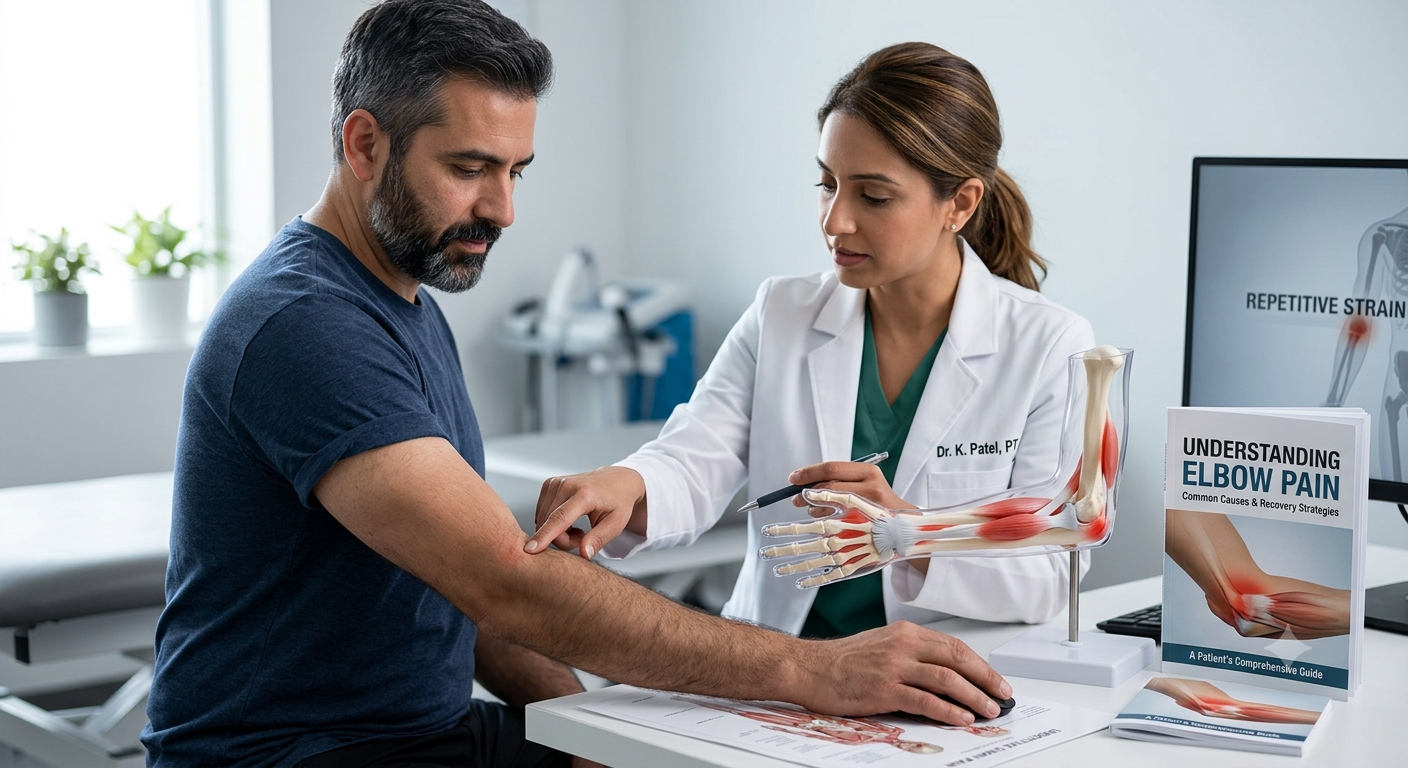
The elbow is a simple hinge joint in which movement is controlled by various muscles and tissues, including, importantly, tendons. Overuse, injuries, infections, and other conditions can irritate or inflame the tissues, causing a dull ache that often develops gradually over time. Painful sensations can be caused by repetitive movements, particularly with the hands and arms, as a result of which the tissues in the affected area are subject to constant pressure. In addition to specific overuse injuries such as tennis or golfer’s elbow, the cause of elbow pain can be a number of other conditions, including arthritis, bursitis, various injuries, and nerve damage, resulting from, for example, swelling or irritation, which can lead to numbness or tingling. Therefore, the nature and location of the pain are essential components of diagnosis, making it easier to address systemic joint discomfort by following dedicated health guides.
Common Symptoms
Elbow pain may feel different for every individual. For some people, it may present as sharp pain upon gripping or lifting. For some people, the pain presents as a dull ache that becomes more noticeable after physical activity or later in the day.
Common symptoms of elbow pain consist of:
- Pain on the outside of the elbow.
- Pain on the inside of the elbow.
- Stiffness or limited range of motion.
- Reduced strength or grip.
- Inflammation, bruising, or swelling in the case of an injury.
- Numbness or tingling may occur if nearby nerves become irritated or compressed.
Pain that occurs at rest or pain that persists despite treatment may be a sign of something more serious. It is also a good idea to seek treatment if the symptoms persist for a prolonged period of time or keep coming back.
The Most Likely Causes
Overuse is one of the most common causes of elbow pain, which occurs due to regular overloading of joints during work, sports, or other activities. This condition often manifests itself in the form of two types of tendinitis: tennis and golfer’s elbow. Although they are grouped together, these diseases are different, however, in both cases, the cause of elbow pain is overuse and not an acute injury.
The second leading cause of elbow pain is an injury. A fall, a sudden pulling of the arm, a blow to the elbow, or its twisting can lead to ligament damage, inflammation, or even a broken bone. In addition, arthritis or bursitis may be the reason for soreness and discomfort, often accelerated by unexpected age-related wear and tear on the joint’s protective cartilage structures.
How to Tell What Kind of Elbow Pain You Have
The location of the pain can help identify the issue. Pain on the outside of the elbow is more likely to be tennis elbow, while pain on the inside is associated with golfer’s elbow. Deep pain, along with stiffness and swelling, is more typical of arthritis or another type of joint inflammation.
The activities that cause the pain can also provide an essential hint. Usually, discomfort that occurs when gripping or lifting something heavy, like a kettle, opening jars, or shaking hands is caused by irritated tendons. Pain due to an injury, such as a fall or a blow to the elbow, can cause a sprain, strain, or fracture. In addition, if the pain is accompanied by a tingling sensation that moves down the arm or into the fingers, it might indicate a nerve problem.
What Helps at Home
For minor overuse pain the first step is to stop or limit the activity that is causing the discomfort. Rest doesn’t necessarily mean don’t do anything at all but rather that you are avoiding the movement that has led to the tissue damage. Applying an ice pack or cold compress can also help reduce pain and swelling in the area following a period of activity.
Support can also be beneficial to reduce strain on tendons in the short term and can be in the form of a forearm strap, wrist support or elbow band. It’s generally a good idea to try to gently move the affected area as much as possible once the initial pain begins to reduce, however it’s best to avoid any movements that will cause a sharp increase in discomfort.
Treatment Options
The treatment of injuries depends on the cause of the disease, the nature, and the duration of the symptoms. In most cases, conservative methods help to get rid of the manifestations of the disease. For example, the treatment of overuse conditions includes a reduction in activity, non-steroidal anti-inflammatory drugs (NSAIDs), physical therapy, and a progressive return to activity. Physical therapy is particularly important in the case of overload of tissues and the imposition of movements.
If conservative methods do not bring the desired result, the doctor may recommend more invasive treatments, such as injections. In addition, to relieve severe pain, a surgeon can resort to surgery if tissue damage cannot be controlled without it. At the same time, it is vital not to confuse the different causes of elbow pain because the treatment is built accordingly to the particular case. So while tendon irritation requires a reduction in activity, fractures require a more traumatic approach.
When to See a Doctor
You should seek medical attention if the pain is severe, persists despite self-care measures, or is accompanied by swelling, bruising that doesn’t go away, obvious deformity, loss of range of motion, or pain following a fall. Numbness, tingling, or weakness can also be a sign that something more serious is going on like nerve damage.
Seeking medical attention is a good idea if the pain lasts two weeks or more after trying to perform self-care to reduce the pain and swelling.nhs
Prevention and Recovery
Preventing repeated stress on the affected area can significantly lower the risk of developing the condition.This can be achieved by limiting the strain on the elbow, following the proper form and techniques, and giving the muscle a rest when needed. Another helpful measure is to strengthen the forearm muscles and improve flexibility to reduce tension in the tendons.
The most common mistake that delays healing is an attempt to return to physical activity too soon after the injury. The process of repair is slow because the tendon needs to rebuild its inner structure, so rushing back into sports, weightlifting, and other strenuous activities is a major cause of elbow pain prolonging for months or even years.clevelandclinic
Practical Example
A person who types on a computer all day and then plays tennis on the weekends may develop pain on the outside of their elbow after holding their racket. This person might have the most common type of repetitive strain injury called tennis elbow. Instead of continuing to type and play tennis, the patient needs to stop the aggravating activity, apply ice, modify their activity or equipment, and perform specific strengthening exercises before returning to sport.
If the same patient experienced pain with swelling after falling on their elbow, then the treatment plan would be different since the cause would not be repetitive strain but rather an acute injury.
Conclusion
Elbow pain is common, but you shouldn’t accept this pain because it can interfere with daily activities. The most common causes of elbow pain are overuse or injury;
however,
the causes can also be due to irritation of tissues around the elbow, for example, tendons, arthritis, nerve problems, or fractures. The best treatment for elbow pain should involve determining the underlying cause, minimizing stress on the elbow, and seeking medical attention if the pain is severe or persistent.
Frequently Asked Questions
The most common cause of elbow pain?
Repetitive strain and overuse of the elbows, such as in tendinitis are among the most common causes of pain. These conditions may result from overuse or overexertion of the elbow, which can damage tissue, causing pain.
What is the usual sensation of tennis elbow?
There is pain at the outside of your elbow, which is made worse by gripping, lifting, or twisting movements.
Will the pain subside on its own?
It will only require rest if it is caused by simple overuse and does not cause significant discomfort. However, if the discomfort persists for more than a few days or weeks, it should be examined.
Should I apply ice or heat to the affected area to see if it helps?
In many cases, ice is recommended to alleviate the discomfort during the first few days following an injury; however, some people find that applying heat to the afflicted region helps. Every individual’s situation is different.
When should I seek immediate medical attention for elbow pain?
If there is discomfort in the elbow, seek medical treatment right away. Swelling, deformity, bruising, restricted mobility, weakness, and/or numbness are additional reasons to consult a doctor if the discomfort lasts for a lengthy period of timeweiss
Can a brace help with elbow pain?
Yes, in some instances, a brace or forearm support can help alleviate discomfort and restrict movement that could exacerbate the condition.nhs
Can other structures in the elbow cause pain besides the joint itself?
Elbow discomfort can also be caused by a number of other tissues in the joint, such as tendons, ligaments, bursae, or nerves, not just the normal joints.ssm