If you are wondering what jawline buccal fat removal 10 years later might look like, the most important point is that the result does not exist in isolation. Changes to the aging process are brought about due to varying weight, skin laxity, and the changes in the underlying bone structures as well as endogenous changes to facial fat. A contoured cheek may not appear the same when you turn 40 or 50 as it may do in your 20 or 30s.
Buccal fat is removed permanently, making facial fat removal procedures an important consideration when evaluating long-term changes. A buccal fat removal operation removes a portion of this deep fat pad within the cheek. The Buccal fat removal procedure helps give the lower half and the middle part of the face a slender appearance and allows for more definition between the jaw and the cheeks. As the fat which is removed is not able to fully return. This operation involves knowing how much fat can be removed; however, as studies into this are quite limited, to have knowledge into the precise way the individual’s face will turn aging is still unknown.
This fact may be particularly useful to those young individuals who are willing to undergo the procedure or those with a naturally thin face, so as an understanding of the way the facial aging process will progress.
What Is Buccal Fat Removal?
Buccal fat removal, also called buccal lipectomy or cheek reduction, is a cosmetic procedure that removes a selected amount of the buccal fat pad from inside the cheek.
When considering jawline buccal fat removal 10 years later, the buccal fat pad is a distinct deposit of fat located deep within the cheek.This adds volume to the face, and can provide structure between the cheek, jaw and remaining features. In essence, the operation can make the face slimmer, with more defined angles and emphasis around the cheekbones and jaw.
This procedure must not be confused with weight loss, which can also decrease the fullness in the face. The Buccal fat pad is a specific anatomical entity and may respond differently from superficial fat reserves in body composition changes.
This is also relevant from a long-term perspective. Changes in body weight can occur before and after surgery and are unable to alter the fact that a section of buccal fat pad has been removed surgically.
Does the procedure actually change the jawline?
It can improve the visual definition of the lower face, but the procedure is not technically a jawline surgery.
When considering jawline buccal fat removal 10 years later, buccal fat sits primarily in the cheek rather than directly along the edge of the mandible. Removing it can create a stronger transition from the cheek toward the jaw, making an existing jawline look more visible. The final appearance still depends on bone structure, skin thickness, other facial fat compartments, muscle size, and genetics.
Someone with a naturally strong jaw may notice a dramatic contour change, while someone with a softer skeletal structure may see a more modest difference.
What Can Your Face Look Like 10 Years Later?
Everybody is not going to look one certain way after ten years have passed since cheek fat removed. Some may appear the way they did a little with some degree of worry. However other people might observe the face slowly appears more lean/hollow/older than what would be expected as they aged naturally the tissues around would shift.
This is partly because facial aging involves more than the skin.
When considering jawline buccal fat removal 10 years later, it is important to understand that facial changes can continue over time. Facial fat compartments can change, soft tissues can shift, and bone structure can undergo age-related changes. A CT study in adults has tracked changes over more than 10 years, demonstrating substantial decline in fat volume in the superficial and deep midface. However, the buccal fat pad volume did not change significantly in that particular sample. This is interesting because it illustrates how such an abbreviation as “facial fat loss with aging” must be taken with qualification.
It seems that, within different areas of facial fat, the two do behave as separate units.
If a portion of the buccal fat was previously excided, it is still possible for it to lose volume along with its surroundings in the span of the next ten years. Over time, the net effect can be increased prominence of an original surgical outcome.
Why Aging Can Change the Appearance
Natural facial volume loss
One of the biggest considerations is gradual volume loss elsewhere in the face.
When considering jawline buccal fat removal 10 years later, it is important to remember that aging does not simply make every facial fat compartment disappear at the same rate. Some fat will decrease in volume, while another compartment may sag or enlarge. The study analyzing facial CT images at over a decade apart documented a decline in superficial and deep midface fat volume.
Thus a person, beginning with good, full cheeks, may enjoy a lean face for quite some time before other facial compartments have thinned sufficiently to cause hollows to appear that will again then match this initial appearance.
This does not mean hollows occur in all faces after this operation-only that the initial anatomy as well as the size of the amount of fat removed dictates if this is a likely phenomenon over the long haul.
Skin laxity
Skin also changes over time, with skin elasticity and aging influencing the appearance of the face.
Collagen and elastin levels drop with age and the skin generally becomes flabbier. If underlying volume in the face decreases while it loses elasticity, folds, laxity or fatigue can then be apparent with the facial appearance.
Buccal fat removal doesn’t automatically make you experience all these things, which happen as part of ageing normally. The worry is that by subtracting volume early in the face you will lack volume from soft tissues later to offset them.
Changes in the lower face
The aesthetic appearance of the jawline is formed by multiple factors such as: bone structure, muscle, superficial fat, deep fat and skin. An individual might thus see their jawline become less defined over the years compared to one specific period in time without any change in the procedure. Bucca fat extraction has been studied with regard to position of removal, suggesting how factors such as fat volume and location of removal can alter many aspects of the lower face.
Can Buccal Fat Removal Cause a Hollow or Gaunt Appearance Later?
Can create an empty appearance on some patients (especially after significant facial volume removal, or where natural aging processes cause a leaner figure.
Doesn’t suggest that a patient will necessarily always look gaunt after having this performed – one systematic review, 2026, found overall high satisfaction levels but also pointed out poor data regarding late outcomes given the short follow-up periods of many studies, and one report found a proportion of patients with a gaunt appearance.
Previous reviews identified a similar pattern of excellent short-term aesthetics, but a lack of data on facial aging.
Simple lesson-over-removal is likely more worrying with respect to aging than under-removal; a slightly overfilled cheek can potentially be trimmed/contoured again, but a large loss of deep facial volume is very difficult to compensate for when an element of aging naturally brings about thinner tissues and the need for volume replacement.
What Factors Determine the Long-Term Result?
Age at the time of surgery
Age is one of the most important considerations.
A patient having surgery while their cheeks are naturally full and there is great soft tissue volume in the cheeks might have a different life-long outcome then a person with an already thin or “pointy” face.
Cleveland Clinic notes that skinny people with narrow faces and also the older patients may not be very good candidate for the procedure since buccal fat naturally depletes over years.
The younger the patient, the harder the outcome might be to predict how fat naturally the face will become in years down the line.
Amount of fat removed
The goal should not necessarily be to remove as much as possible.
Research examining volumetric outcomes has emphasized that buccal fat provides meaningful facial volume and that removing only the excessive portion is important because restoring lost volume later can be difficult after age-related changes occur.
A conservative approach may therefore be more appropriate for someone concerned about maintaining facial fullness long term.
Genetics and facial structure
Two people with the same procedure can age very differently.
Genetics influence facial shape, skin quality, fat distribution, bone structure, and the tendency to develop hollowing or laxity. A naturally angular face may require less tissue removal than a rounder face.
Weight changes
Major weight loss can make the face appear significantly leaner. Conversely, weight gain can increase facial fullness.
If the patient later loses significant amounts of weight then years later the contribution to the final shape between that caused by surgery and that caused by the patient’s changing weight will be less evident. That is why age and patient weight changes will Ideally also be represented in pre and post operative photos.
What Are the Possible Benefits a Decade Later?
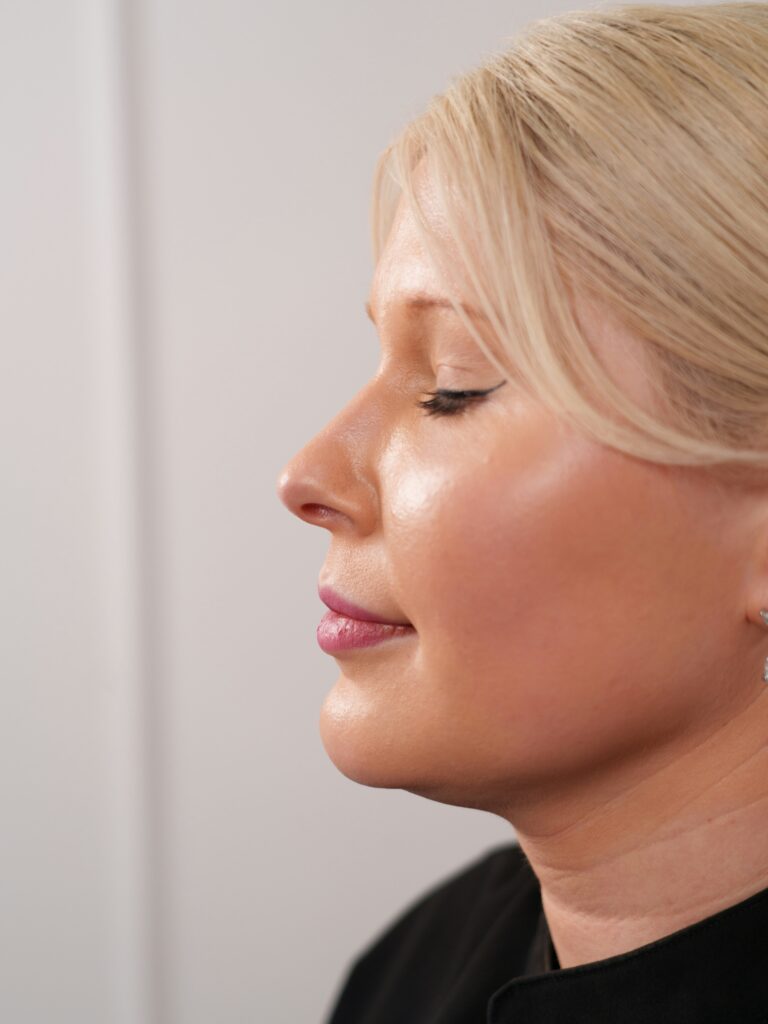
For an appropriately selected patient, the original contouring effect can remain visible many years after surgery.
Potential long-term advantages include:
- Persistent reduction in cheek fullness
- More visible cheekbone definition
- A slimmer facial silhouette
- Greater contrast between the cheeks and jawline
- A contour that does not depend on repeated injectable treatments
This actually removes a physical piece of the buccal fat pad so cannot be compared to temporary fillers and injectables, which dissolve over time.
Saying permanent doesn’t mean it won’t change however, the physical part that has been removed stays removed, but the rest of the face will still age as normal.
What Are the Risks of Buccal Fat Removal?
As with most surgeries, buccal fat removal procedures may have complications. Risks cited by the Cleveland Clinic are infection; injury to nerves of the face or salivary duct; altered sensation or numbness of the face; asymmetry of the face. The anatomy is indeed relevant since the buccal fat pad lies next to the facial nerve and parotid duct.
Issues of cosmetic concern also exist; that too much is removed leads to a scooped out look or discrepancy between the cheeks and other areas of the face.
In a 2020 systematic review of 1100+ reported cases satisfaction levels were mostly high and adverse events mostly mild. However, the authors point out long-term evidence is scarce because follow up has often been short. This fact should be addressed in any realistic discussion about outcomes ten years post operatively.
Can the Results Be Reversed?
Not easily.
Due to surgical removal of some of the buccal fat pad, simply waiting for this to grow back is not the answer. That is one of the reasons that surgeons tend to take careful care in patient selection and to preserve the tissue conservatively. If the hollowness now develops years down the line, rather than restoring the original structure, the problem may now require some sort of facial volume replacement.
Fat grafting
Occasionally, autologous fat transfer could be undertaken to reconstitute volume in hollow areas. Each variable also exist with fat transfer such as percentage that transferred fat survives as well as volume changes over time. In relation to fat transfer to facial anatomy, study results has revealed a significant loss of transplanted volume during the first few months after which subsequent remodeling continues to take place, hence the need for planning to restore volume.
Dermal fillers
In selected cases, injectable fillers may be used to restore volume or modify facial proportions. The appropriate product, injection site, amount, and safety considerations depend on individual anatomy.
Fillers are not a universal correction for previous cheek-fat removal, particularly when the issue involves significant volume loss or generalized facial aging.
Surgical rejuvenation
For someone who is substantially older and has both volume loss and skin laxity, a facial rejuvenation procedure may be considered rather than simply adding volume.
The appropriate treatment depends on what has changed. Restoring volume, improving skin laxity, or adjusting tissue position are different goals.
A Practical Way to Evaluate Your Face 10 Years Later
If you had the procedure years ago and are unhappy with your current appearance, do not assume the surgery itself is the only cause.
A useful evaluation should consider several factors.
Step 1: Compare photographs from different years
Look at photographs from before surgery, shortly after the procedure, and several years later.
Try to compare images taken from similar angles and under similar lighting. This can reveal whether the change developed gradually or appeared soon after surgery.
Step 2: Consider weight changes
Think about whether your body weight has remained relatively stable.
Significant weight loss can make cheeks look substantially thinner, while weight gain can partially mask contour changes.
Step 3: Identify the actual concern
“Sunken face” can describe several different problems.
You might actually be noticing:
- Hollow cheeks
- Under-eye volume loss
- Nasolabial folds
- Skin laxity
- Jowling
- Loss of jawline definition
- Temple hollowing
- General facial thinning
These problems do not all require the same treatment.
Step 4: Get an anatomical assessment
A qualified facial plastic surgeon or plastic surgeon can evaluate the distribution of remaining fat, skin quality, skeletal structure, and areas of volume loss.
The goal should be to determine what has changed rather than automatically assuming more fat should be added.
Common Mistakes to Avoid
The first common mistake is believing that 10-year-old photos have to appear with no alteration at all to our faces. Our faces are constantly evolving due to age alone. A number of factors relating to the age of your face affect your proportions.
Mistakes related to comparing social-media photos – The distortion, different camera angles, poses, amounts of make-up, filters and PhotoShop can make even slightly bigger alterations to a face look drastically more significant then they really are.
Not simply pumping the cheeks to fill out any hollow space you find – we’ve seen patients overfill their faces trying to fill hollows only to regret it later because facial aesthetics and balance are of primary concern. Getting rid of excess mass for the jawline results. There have even been studies proving that a greater rate of mass extraction does not equate to a more desirable jawline. Buccal fat is significant to volume in the face so judicious selection is recommended for an optimal outcome.
When Should You See a Specialist?
A consultation makes sense if you’re beginning to see a change or worsening asymmetry, if there’s a marked concavity to your face, persistent or new numbness, swelling or discomfort you didn’t have before or which is unusual to your body, etc., particularly when considering facial plastic surgery options. Consultation prior to fillers, fat grafting, or another procedure also makes particular sense if you are looking at revising treatment years after you’ve originally had your surgery done.
At the consultation you’ll know if volume is your primary issue, the laxity of your skin, the way your facial fat is shifting, the bones of your face, etc. If this will be the first time you undergo a buccal fat reduction procedure, you should factor long-term consequences into the consultation; in other words what could the volume taken out do to your face over time rather than what is your face going to look like immediately following surgery.
Final Takeaway
Jawline buccal fat removal 10 years later can still produce a noticeable slimming effect, but the face surrounding that removed tissue will continue to change. Over time volume loss due to aging, skin laxity, variable weight changes or a specific anatomy will contribute to the changes we see in the cheeks and jawline. Aesthetically pleasing outcomes from buccal fat removal are expected at present although evidence of this long term, for over a decade, is not of high standard.
The factor of the greatest concern long term will be the amount of volume removed to begin with and conservative treatment coupled with the right candidate will likely preserve a long term aesthetic result. At such time as hollows occur, as a natural part of aging for instance, the aetiology must be treated rather than simply adding volume and a properly qualified surgeon (plastic surgeon or plastic & facial plastic surgeon) can examine your anatomy to tell you safest course of treatment.

Frequently Asked Questions
1.Does buccal fat removal still affect your face 10 years later?
Yes. The portion of the buccal fat pad removed during surgery does not simply return to its original state. However, the overall appearance can change as the rest of the face ages. Skin laxity, changes in other facial fat compartments, weight fluctuations, and changes in facial structure can all influence the result. Long-term research remains limited, so individual outcomes can vary considerably.
2.Can buccal fat removal make your face look hollow as you age?
It can contribute to a more hollow appearance in some people, particularly if a substantial amount of facial volume was removed or the person naturally loses facial volume with age. This does not mean everyone will develop hollow cheeks. Current research suggests that long-term effects are still not well established because many studies have relatively short follow-up periods.
3.Does buccal fat grow back after removal?
The surgically removed portion of the buccal fat pad is not expected to simply grow back in the same way. Facial fullness can still change because of weight gain, aging, hormonal changes, or changes in other fat compartments. Therefore, a fuller or thinner appearance years later does not necessarily mean the removed fat has returned.
4.Is buccal fat removal permanent?
The tissue that is surgically removed is considered permanently removed, but the cosmetic appearance is not permanently fixed. Your face continues to age, and the surrounding skin, fat, muscles, and underlying structures can change. A 2026 systematic review found generally high satisfaction with buccal fat reduction but also noted that long-term outcomes remain poorly assessed.
5.Can you reverse buccal fat removal 10 years later?
There is no simple procedure that reliably restores the original buccal fat pad. If someone develops unwanted facial hollowing, a specialist may evaluate options such as carefully planned fat grafting or other volume-restoration treatments. The appropriate approach depends on whether the problem is actually loss of buccal volume, broader facial aging, skin laxity, or another change.
6.Why can the jawline look different years after buccal fat removal?
The jawline is influenced by more than buccal fat. Aging can alter facial fat distribution, skin elasticity, soft-tissue position, and the appearance of the underlying facial skeleton. Recent research on the aging buccal fat pad also suggests that its behavior is more complex than simply shrinking continuously with age; changes can include descent and positional alterations.
7.Is buccal fat removal safe long term?
Available evidence suggests that the procedure can produce favorable aesthetic results, but researchers emphasize that high-quality long-term evidence is limited. A 2026 systematic review found high satisfaction and mostly minor reported complications, while also noting that long-term outcomes were poorly assessed.
8.What should you do if your cheeks look too hollow years after surgery?
First, determine what is causing the change rather than assuming the original procedure is entirely responsible. A qualified facial plastic surgeon or plastic surgeon can assess your remaining facial fat, skin quality, facial proportions, weight history, and other age-related changes. Depending on the findings, treatment may involve observation, volume restoration, or addressing skin laxity rather than simply adding more cheek volume.
Conclusion
Jawline buccal fat removal 10 years later can look different from the original result because facial aging continues long after the procedure. After surgery, the fat removed doesn’t seem to be coming back; rather other parts of your face can become hollowing over time, move position or develop reduced firmness. Current data supports that patients can see successful cosmetic results with buccal fat removal, however, we are still lacking data looking over an entire ten years or more.
What type of change you have is dependent on how much fat was removed, how young you were when operated on, your genes, any subsequent weight gain or loss, and the specific nature of your face over the long-term. If the concern years later relates to hollowing, sagging or your mandibular shape, a customized assessment of your tissues will yield more valuable information than simply saying it was the buccal fat removal.