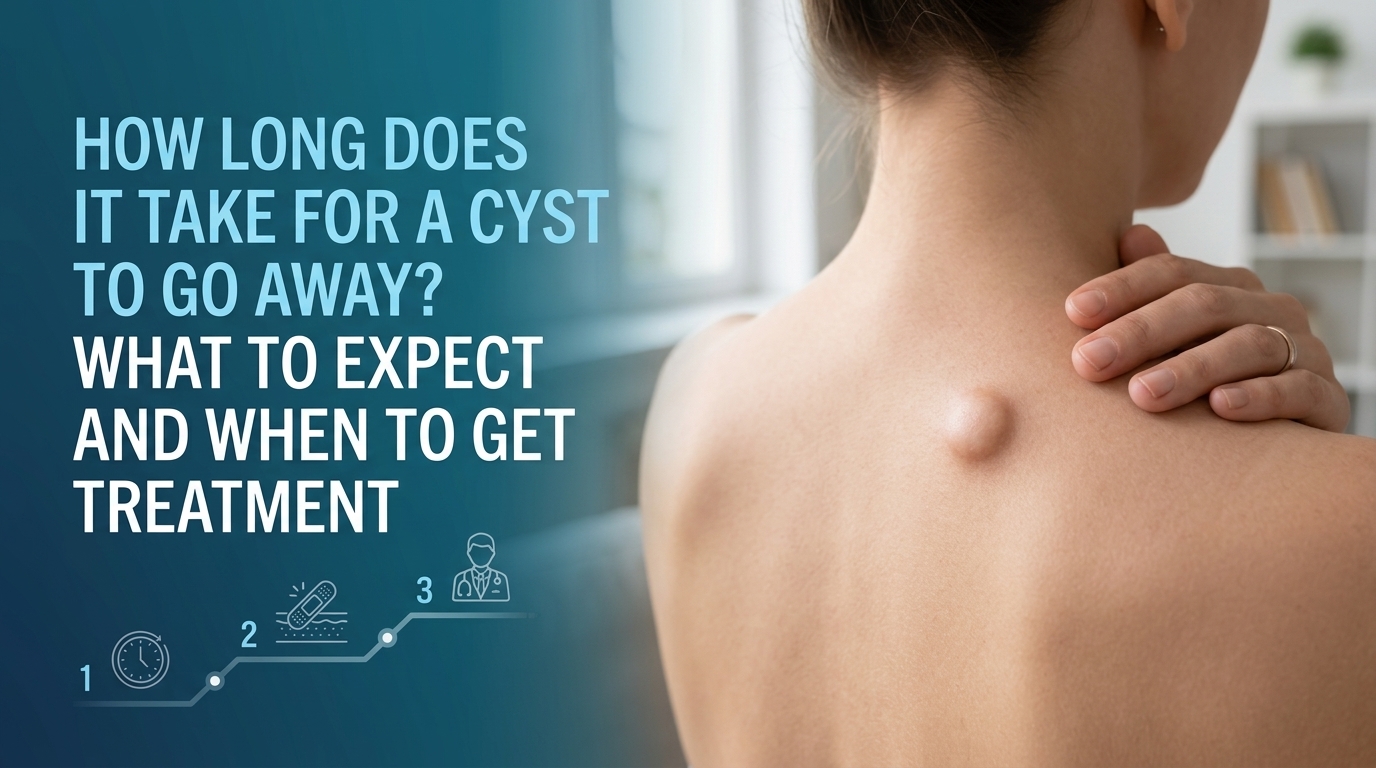
When dealing with a cyst, sometimes it will just vanish over time, while other times it will stay lodged just beneath your skin for weeks, months, and sometimes even years. Ultimately, it comes down to exactly what kind of cyst you are dealing with and where on the body it is located, whether it has become inflamed and infected, and whether or not it has been treated. One will usually fade away relatively quickly while another may stay put indefinitely and go unnoticed if left alone untreated.
With a standard epidermal cyst, there simply isn’t a single designated number of days or weeks. Some will grow and diminish on their own but others simply will not unless professionally treated. At what point does a cyst warrant the attention of a doctor rather than you continuing to pick and prod it with a do-it-yourself kit? At any sign that the cyst has begun to hurt, appears inflamed (red, hot, swollen), is growing quickly, keeps bursting, leaking, or keeps coming back.
Knowing what kind of cyst you are dealing with will allow you to determine if watching the cyst is a feasible option or if treatment is really more suitable.
How Long Does It Take for a Cyst to Go Away Naturally?
This time could be anything from a few days to several years, depending on the particular cyst. A few cysts are temporary, and may subside on their own, the result of infection or a blockage under your skin which resolves over time. Other cysts, though, grow a distinct lining or sac from which they continue to generate content; these might not go away over time even when completely painless.
For example, epidermoid cysts may start of very small and cause no discomfort, and can be relatively small and persistent for years, even decades, if left untreated.
While it’s possible for any cyst to decrease and stop giving you trouble, just because it’s getting less painful doesn’t mean your cyst is actually getting better. In fact, your inflammation may lessen while the sac of the cyst is still under the surface of your skin.
Why there is no standard healing timeline
Cyst is a generic term and not a diagnosis. Skin, ganglion, ovarian and dermoid cysts are three separate entities, each with different etiological mechanisms and natural history. A dermoid cyst, for instance, will rarely resolve spontaneously and will require surgical intervention when needed. Thus the duration may not be predicted solely by the size and the morphology.
What Determines How Quickly a Cyst Disappears?
Several factors influence what happens after a cyst develops.
Type of cyst
One of the main differentiations is the type of cyst. Some cysts are simply fluid collections that are not permanent or some have a lining so that they don’t go away. A person can form an epidermoid cyst that causes inner skin cells migrate down into the lower dermis and then still continue to create keratin into the cyst. They will not necessarily make the cyst go away by shrinking them with swelling and then it resolves naturally.
Size and location
A small, superficial lump may be easier for the body to resolve than a deeper or larger cyst. Location also affects treatment decisions. A cyst on the face, scalp, or another area that is repeatedly rubbed or bumped may become irritated more easily.
Inflammation
A cyst can become swollen and tender without necessarily being infected. Inflammation can temporarily make a relatively quiet cyst look much larger and feel painful.
Once the inflammation settles, the cyst may shrink back toward its previous size. That improvement is helpful, but the cyst may still be present underneath the skin.
Infection
An infected cyst generally requires more attention than a simple, painless cyst. Increasing redness, warmth, swelling, tenderness, or drainage can indicate infection or significant inflammation.
A healthcare professional may recommend appropriate treatment, which can include antibiotics in cases of infection and other appropriate treatment options for skin infections.
Whether the cyst has been drained
Drainage can relieve pressure and reduce the size of a cyst, but it does not always remove the cyst wall or capsule. Consequently, the lump can return after drainage.
For epidermoid cysts, complete removal of the cyst and its capsule is generally more effective at preventing recurrence than simply draining its contents.
Can a Cyst Go Away Without Treatment?
Yes, some cysts may shrink or go away without treatment, but don’t count on every bump vanishing on its own. If it’s a simple skin cyst that has already been checked by a doctor and isn’t a source of pain or discomfort, observation may be sufficient. Uncomplicated epidermoid cysts often don’t need to be treated, especially if they aren’t bothering you.
The nuance is between improvement and resolution.
A cyst might hurt less, be less swollen, or appear to get smaller while still having its sac. Then it may again become inflamed or slowly expand. If the growth has never been assessed, it is generally better to get an unfamiliar lump checked out instead of assuming it’s a safe cyst. The NHS emphasizes the necessity of seeking medical care for any unexplained skin lump.
What Can You Do at Home?
If a healthcare professional has identified the lump as a simple skin cyst and has advised observation, conservative care can help keep the area comfortable.
Keep the area clean
Wash the surrounding skin gently with ordinary soap and water. Avoid aggressive scrubbing, which can irritate an already sensitive area.
Try a warm, moist compress
4 Ways You Can Treat a Cyst With an Epidermoid You might also use your warm compress for a brief few minutes, letting the skin cool down between usages. A warm, wet cloth might make the uncomfortable cyst more amenable to natural release in others cases. Mayo Clinic names warm, wet compresses one treatment that can assist an epidermoid cyst develop and drainage. These cloths shouldn’t be too hot to make the cyst more painful: You don’t wish to scald your skin!
Avoid repeatedly touching it
Frequent squeezing, pressing, or rubbing can increase irritation. It can also damage the skin over the cyst.
Protect it from friction
If clothing, shaving, exercise equipment, or another activity repeatedly rubs the area, reducing that irritation can make the cyst more comfortable.
These measures are primarily for comfort and skin care. They should not be viewed as a guaranteed way to eliminate a cyst.
Should You Pop or Drain a Cyst Yourself?
Nope! Don’t try to pop, stick a pin in or cut a cyst open at home.
Although it may be incredibly satisfying to poke away at a lump that’s feeling swollen, it risks bacteria becoming trapped inside. It will get more inflamed, potentially bleed more, damage the tissue underneath, as well as causing infection. In fact, the NHS even advises against doing so: “There’s a risk of infection or the existing infection spreading if a skin cyst ruptures, so avoid attempting to squeeze it.”
The final nail in the coffin for DIY cyst removal is that even if you manage to get something out, there is still the cyst sac in place. And it can grow back. Only a doctor can assess if your cyst should be drained, deal with the infection (if there is one) and take any further action.
Medical Treatments That Can Make a Difference
When observation is no longer appropriate, treatment depends on the type and condition of the cyst.
Incision and drainage
A healthcare professional may create a small opening and release the contents of a cyst through a procedure known as cyst incision and drainage. This can quickly reduce pressure and discomfort.
However, drainage alone does not necessarily eliminate the cyst because its capsule may remain. For this reason, recurrence is possible.
Surgical removal
For a bothersome epidermoid cyst, complete surgical excision can remove the cyst and its surrounding capsule. This approach can reduce the chance of the cyst returning, although it can leave a scar.
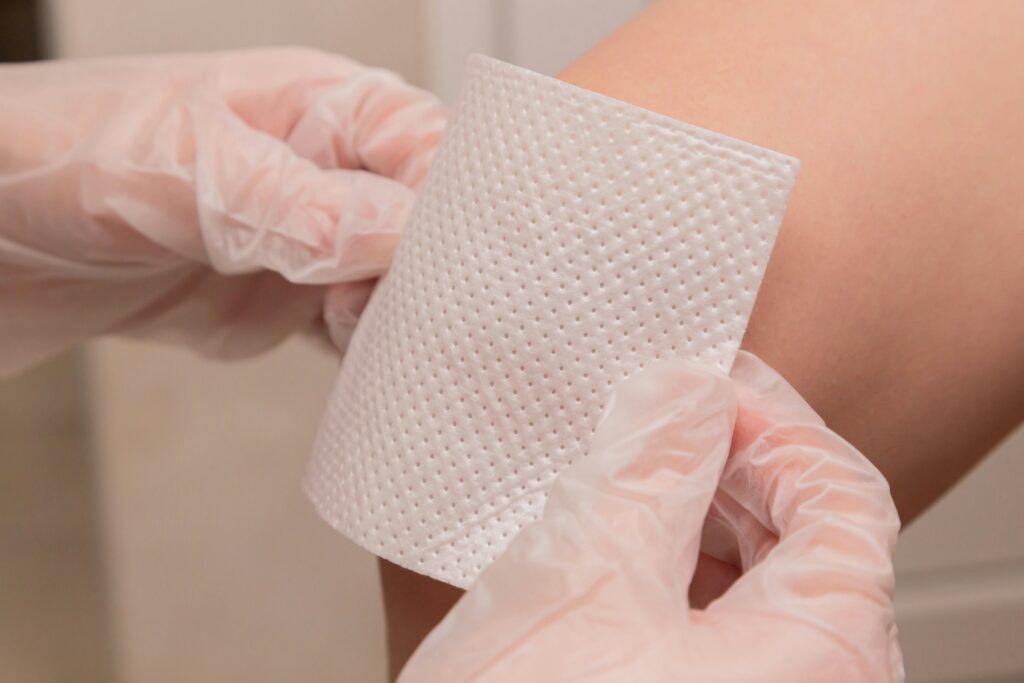
The procedure is commonly performed with local anesthesia for appropriate superficial cysts.
Steroid treatment
A clinician may sometimes inject a steroid into an inflamed epidermoid cyst to reduce swelling. This is intended to control inflammation rather than necessarily remove the underlying cyst.
Antibiotics
Antibiotics may be used when a cyst is infected. They should not be treated as a universal solution for every cyst because an uncomplicated cyst does not automatically require antibiotics.
Common Mistakes That Can Delay Improvement
Lifestyle habits that may aggravate a cyst or cause complications Some habits people have at home can potentially lead to complications or make the condition worse, such as repeatedly pinching a cyst. Pressure on the skin around the lump can cause pain and damage the skin. Piercing the lump with a needle, even just to drain pus from inside it, can lead to an infection even if sterilized, because not everyone have sterile methods at home.
Treating everything as a cyst is also risky, because skin lumps can have varied causes and not just looks.
The NHS warns against self-diagnosing skin lumps that have no apparent reason. In addition, one habit of people is to let the cyst sit if symptoms are getting worse, such as new pain, tenderness, swelling, heat and discharge from the lump. This should encourage you to take a doctor’s opinion instead.
When Should You See a Doctor?
A new or unexplained lump should be evaluated, particularly if you are unsure what caused it or whether it requires proper skin health care. Medical assessment becomes especially important when the lump changes.
Seek professional care if the cyst or lump:
- Grows quickly
- Becomes painful or increasingly tender
- Turns red, warm, or significantly swollen
- Opens or starts draining
- Keeps coming back
- Interferes with daily activities
- Is located somewhere unusual
- Changes in appearance
- Remains unexplained
You should also see a healthcare professional if the lump keeps developing, breaks open, becomes painful or infected, or is rubbed more than once or has cosmetic affects (Mayo clinic). According to the NHS, you should consult a healthcare professional over an unknown lump. However, you may require out-of-hours medical advice if the lump is red or sore. A healthcare professional may also take images of the lump, or send off a tissue sample for further testing if they are unsure what it is.
What If the Cyst Bursts?
Your cyst might ooze thick fluid if it burst, it may be sore and become infected. Do not try to squeeze the rest out. You should just keep the site clean, and refrain from manipulating the area unnecessarily.
Call your doctor if there is redness, pain, swelling, warmth or drainage.
Even if the burst cyst appear to be smaller as material comes out of it does not mean that the cyst has vanished; an unpopped lesion is still lurking there just beneath the surface of the skin.
Why Some Cysts Keep Coming Back
Having a recurrent lump can be confusing. You drain it, the lump seems to go away, and then months or years later the same lump reappears. The cyst may return because draining just evacuates the material inside, rather than the capsule that generates it.
For a type of cyst called an epidermoid cyst, surgical removal is the best way to achieve this.
That’s also why trying to repeatedly drain the lump at home and failing won’t solve the problem long-term.
How to Think About the Timeline
Instead of expecting every cyst to disappear within a particular number of days, consider these three possibilities:
| What happens | What it may mean |
| The lump gradually becomes smaller | The cyst may be resolving or inflammation may be settling |
| Pain and redness improve but a lump remains | The inflammation may have improved while the cyst itself remains |
| The lump continues growing or repeatedly returns | Professional evaluation and possible treatment may be appropriate |
This approach is more realistic because cysts behave differently depending on their type and underlying structure.
Frequently Asked Questions
1.Can a cyst disappear on its own?
Some cysts can become smaller or disappear without treatment, but others persist for a long time. Epidermoid cysts, for example, may remain for years and sometimes do not disappear without treatment.
2.How long does it take for a cyst to go away after it becomes inflamed?
There is no reliable universal timeframe. Inflammation can settle while the underlying cyst remains. If pain, redness, warmth, or swelling continues or worsens, medical evaluation is appropriate.
3.Does a warm compress remove a cyst?
A warm, moist compress may help soothe an irritated area and can sometimes encourage drainage, but it does not reliably remove the entire cyst or its capsule.
4.Can squeezing make a cyst worse?
Yes. Squeezing can irritate the surrounding skin and may cause rupture or infection. Healthcare sources recommend avoiding attempts to pop or drain cysts yourself.
5.Will a drained cyst come back?
It can. If the cyst capsule remains after drainage, the cyst may recur. Complete removal of the cyst and capsule can reduce the likelihood of recurrence in appropriate cases.
6.Is every skin lump a cyst?
No. A lump can have many causes, including cysts, lipomas, swollen glands, abscesses, and other growths. Because appearances can overlap, an unexplained or changing lump should be assessed rather than self-diagnosed.
Final Takeaway
So, how long does it take for a cyst to go away? There is no single timeline. Some cysts shrink naturally, while others remain for months, years, or indefinitely without treatment. Epidermoid cysts can be painless and stable for a long time, but they may also become inflamed, infected, rupture, or grow.
Do not squeeze or puncture the lump, wash thoroughly, apply a warm compress for the right reasons. See a doctor if you have a new or unexplained lump, whether it is new or returning lump has quickly increased in size or become painful and inflamed or is oozing fluid.
Conclusion
So, how long does it take for a cyst to go away depends largely on its type, size, location, and whether it is inflamed or infected. Some cysts may shrink or disappear on their own within days or weeks, while others—particularly epidermoid cysts—can remain for months or even years without treatment.
The best way to proceed is not to attempt to puncture, drain, or squeeze the cystyourself. Doing so will make you vulnerable to infection, scarring and recurrence of the cyst. A gentle application of a warm compress will help ease the pain of a cyst that is near the skin’s surface.
Nevertheless, cysts that are very painful, developing quickly, accompanied by a rash, growing red, or oozing from your skin require medical assessment. You really ought to know precisely whatsortofcystyousuffer from.
This is, the very most direct route toward understanding what kind of cyst development your in, how to manage it as well as whether or not medical treatment for thecystis required.