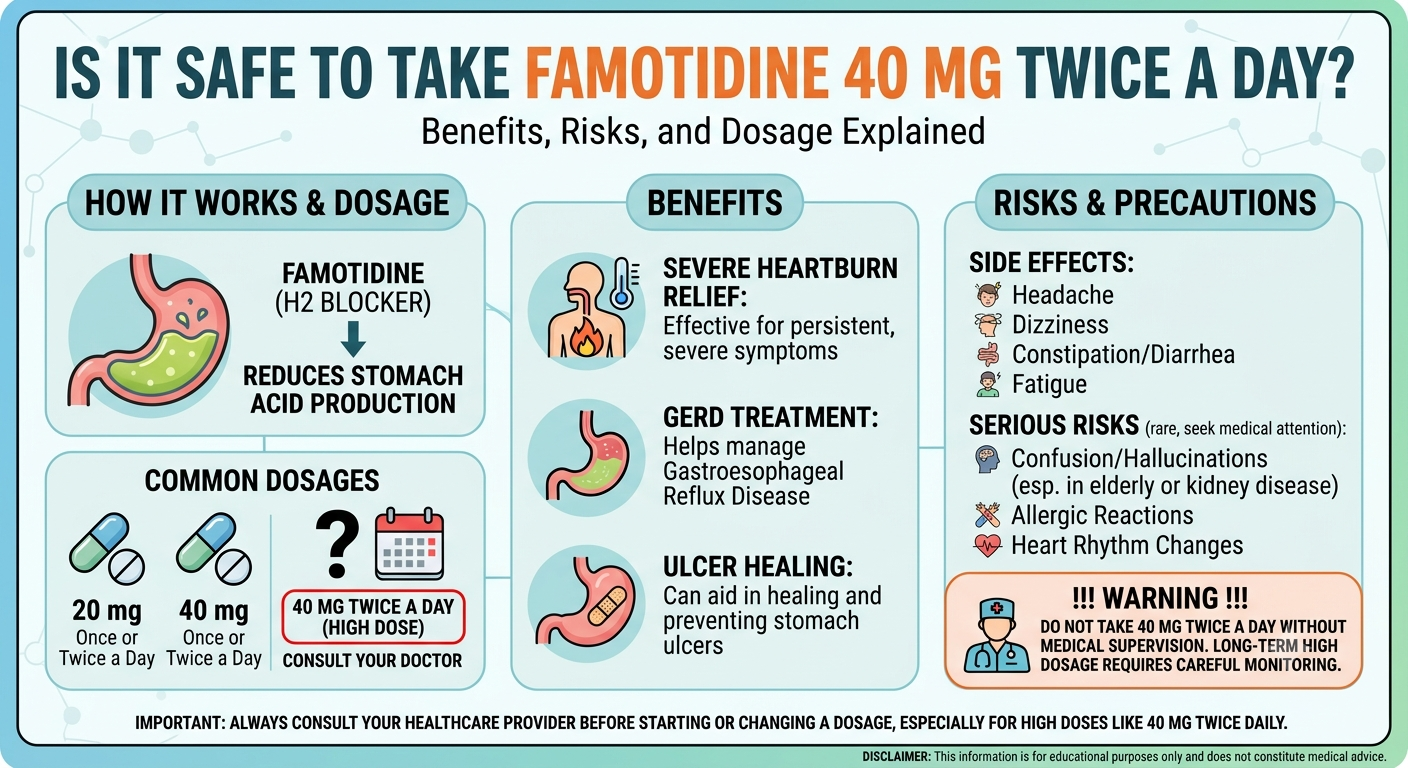
Many people ask “is it safe to take famotidine 40 mg twice a day” after receiving a prescription that seems higher than the dose commonly used for heartburn. Because famotidine is also available in lower over-the-counter strengths, it’s understandable to wonder whether taking 40 mg twice daily is too much.
Whether this dosage is right for you is something your prescribing physician can answer based on your condition, kidney function, age, other medical issues and any medications you’re already taking. Depending on your condition, a doctor may prescribe famotidine 40mg twice daily on a short-term basis. However, this is not an adequate dosage for everybody, and taking this high dose on your own would be considered unsafe.
Always take famotidine the way your doctor prescribed it.
If you take it as prescribed by a healthcare provider, you will also want to learn about when this dose is prescribed and the associated risks of doing so.
What Is Famotidine?
Famotidine belongs to a group of medicines called H2 receptor blockers, sometimes referred to as H2 blockers.
It works by reducing the amount of acid produced by the stomach. Lower stomach acid can help relieve symptoms and allow damaged tissue in the esophagus or stomach to heal.
Healthcare providers commonly prescribe famotidine to help manage conditions such as:
- Gastroesophageal reflux disease (GERD)
- Stomach ulcers
- Duodenal ulcers
- Erosive esophagitis
- Excess stomach acid production in certain medical conditions
- Heartburn related to acid reflux
Because famotidine decreases acid production rather than neutralizing existing acid, it may take some time to provide its full benefit depending on the condition being treated.
Is It Safe to Take Famotidine 40 mg Twice a Day?
The short answer is:
It can be safe for certain people when prescribed and monitored by a healthcare professional, but it is not a dose that should be started or increased without medical advice.
Prescription dosing depends on the specific medical condition.
For example, some patients with more severe acid-related disorders may receive higher doses than someone using famotidine occasionally for mild heartburn.
Several factors influence whether famotidine 40 mg twice a day is appropriate, including:
- Your diagnosis
- Symptom severity
- Kidney function
- Age
- Other medical conditions
- Other medications you take
Because the medication is eliminated primarily through the kidneys, dose adjustments may be necessary for individuals with reduced kidney function.
How Does Famotidine Work?
Stomach acid is produced by specialized cells inside the stomach lining.
Histamine binds to H2 receptors on these cells, stimulating acid production.
Famotidine blocks these receptors, reducing acid secretion.
Lower acid levels can:
- Reduce heartburn symptoms
- Promote healing of ulcers
- Protect the esophagus from acid damage
- Improve symptoms related to acid reflux
Unlike antacids, which neutralize stomach acid already present, famotidine reduces future acid production.
Standard Famotidine Dosages
Famotidine dosing varies according to the condition being treated.
Below is a simplified overview.
| Condition | Common Prescription Approach* |
| Occasional heartburn | Lower OTC doses as directed on the product label |
| GERD | Prescription dosage determined by healthcare provider |
| Stomach ulcers | Prescription dosing varies depending on severity |
| Erosive esophagitis | Higher prescription doses may be used in selected patients |
| Excess acid production disorders | Individualized dosing under specialist supervision |
*Actual dosing varies based on medical evaluation. Always follow your own prescription rather than comparing doses with others.
When Might a Doctor Prescribe 40 mg Twice Daily?
Many people assume this dose is unusually high.
In reality, physicians sometimes prescribe famotidine 40 mg twice a day for carefully selected patients.
Possible situations include:
Severe GERD
When acid reflux leads to persistent symptoms or complications, stronger acid-reducing treatment may be needed.
Erosive Esophagitis
Inflammation and injury to the lining of the esophagus sometimes require higher prescription doses while healing occurs.
Certain Ulcer Conditions
Some ulcer-related conditions may benefit from more intensive acid suppression under physician supervision.
Conditions Causing Excess Acid Production
Certain uncommon disorders lead the stomach to produce unusually large amounts of acid.
Management often requires individualized treatment plans developed by specialists.
Why You Should Never Increase Your Dose on Your Own
People experiencing persistent heartburn sometimes believe taking more medication will solve the problem.
Unfortunately, increasing your dose without medical guidance may:
- Delay diagnosis of another condition
- Increase the likelihood of side effects
- Create unnecessary medication exposure
- Overlook an underlying disease requiring different treatment
Persistent symptoms deserve medical evaluation rather than self-adjusting prescription medication.
Who Should Be Especially Careful?
Some individuals require closer medical supervision before taking famotidine 40 mg twice a day.
People With Kidney Disease
Famotidine is primarily removed from the body through the kidneys.
Reduced kidney function can allow the medication to accumulate, increasing the risk of adverse effects.
Healthcare providers often adjust the dose when kidney function is impaired.
Older Adults
Age-related changes in kidney function may increase sensitivity to certain medications.
For this reason, clinicians often review kidney function and the overall medication list before prescribing higher doses.
Individuals Taking Multiple Medications
There is less likelihood of drug interactions with famotidine than with certain other older H2 blockers. Still, some drugs need to be taken at specific times and watched closely since they interact with acid in the stomach in terms of absorption. Let your doctor know what prescriptions, over-the-counter medicines, and vitamins and supplements you’re taking.
Pregnant or Breastfeeding Individuals
If you are pregnant, planning pregnancy, or breastfeeding, discuss medication use with your healthcare provider.
Treatment decisions should balance symptom control with individual medical circumstances.
Potential Benefits of Higher Prescription Doses
When medically appropriate, higher prescription doses may offer several advantages.
Better Symptom Control
People with significant acid reflux sometimes experience greater relief when stomach acid is reduced more effectively.
Healing of Esophageal Damage
Reducing acid exposure allows irritated tissue to recover over time.
Healing depends on several factors, including adherence to treatment and lifestyle modifications.
Reduced Nighttime Acid Production
Some individuals experience worsening reflux during the night.
Appropriate prescription therapy may improve overnight acid control in selected patients.
Possible Side Effects
Famotidine can cause side effects, although not everyone experiences them.
Many people tolerate it well, but reactions vary.
Commonly reported side effects include:
- Headache
- Dizziness
- Constipation
- Diarrhea
- Nausea
These effects are often mild and temporary.
Less Common but More Serious Side Effects
Although uncommon, more significant reactions may occur.
Seek medical attention promptly if you experience symptoms such as:
- Confusion
- Severe allergic reactions
- Difficulty breathing
- Swelling of the face or throat
- Irregular heartbeat
- Persistent vomiting
- Severe abdominal pain
These symptoms require prompt medical evaluation.
Drug Interactions

Famotidine has fewer drug interactions than some other acid-reducing medications, but interactions remain possible.
Reduced stomach acid may affect how certain medications are absorbed.
Examples include medications that require a more acidic stomach environment for optimal absorption.
Because interactions depend on your complete medication list, discuss all prescription and nonprescription products with your healthcare provider before starting treatment.
Kidney Function and Dose Adjustments
One of the most important safety considerations is how well your kidneys are functioning.
Since famotidine leaves the body mainly through the kidneys, impaired kidney function may lead to higher drug levels in the bloodstream.
Healthcare providers may recommend:
- Lower doses
- Longer intervals between doses
- Regular monitoring
- Alternative treatment strategies
This is one reason why someone else’s prescription should never be copied, even if the medical condition appears similar.
What Happens If You Accidentally Take Too Much Famotidine?
An accidental extra dose of famotidine is not always a medical emergency, but it should never be ignored—especially if you took significantly more than prescribed or have underlying kidney disease.
Taking famotidine 40 mg twice a day exactly as prescribed is different from accidentally exceeding your prescribed dose. If you realize you’ve taken an extra tablet, follow the instructions provided by your healthcare provider or pharmacist rather than taking additional doses to “balance it out.”
Symptoms of taking too much famotidine may vary depending on the amount taken, your age, kidney function, and overall health. Possible symptoms can include:
- Dizziness
- Drowsiness
- Confusion (particularly in older adults)
- Nausea
- Vomiting
- Rapid or irregular heartbeat in uncommon cases
If someone develops severe symptoms such as difficulty breathing, loss of consciousness, seizures, or significant confusion after taking famotidine, seek emergency medical care immediately.
When Should You Contact Your Doctor?
While many people tolerate famotidine well, certain situations deserve medical advice instead of self-treatment.
Contact your healthcare provider if:
- Heartburn continues despite taking famotidine as prescribed.
- Symptoms return immediately after stopping the medication.
- You need acid-reducing medication for several weeks without improvement.
- Swallowing becomes difficult or painful.
- You experience unexplained weight loss.
- You vomit blood or notice black, tarry stools.
- You develop chest pain that could be related to the heart rather than acid reflux.
These symptoms may indicate a condition that requires further medical evaluation rather than simply increasing the medication dose.
Tips for Taking Famotidine Safely
If your healthcare provider has prescribed famotidine 40 mg twice a day, following a few practical habits can help you get the best results while reducing potential risks.
Take It Exactly as Prescribed
Never increase, decrease, or stop the medication without speaking to the prescribing clinician.
Higher doses are not necessarily more effective for every condition.
Keep Follow-Up Appointments
Some acid-related conditions require reassessment after several weeks to determine whether treatment is working or if the dosage should be adjusted.
Tell Your Doctor About Every Medication
Include:
- Prescription medications
- Over-the-counter medicines
- Herbal products
- Vitamins
- Dietary supplements
This helps identify possible interactions before they become a problem.
Discuss Kidney Problems
If you’ve ever been told you have reduced kidney function, make sure every healthcare provider involved in your care knows before prescribing famotidine.
Avoid Long-Term Self-Treatment
Persistent acid reflux may indicate GERD, ulcers, or another digestive condition that deserves proper diagnosis instead of repeated self-medication.
Lifestyle Changes That Can Improve Acid Reflux
Medication often works best when combined with healthy lifestyle habits, including following evidence-based recommendations for managing GERD symptoms naturally.
Depending on the underlying cause of your symptoms, your healthcare provider may recommend:
Maintain a Healthy Weight
Maintain a healthy weight, as it can reduce pressure on the stomach and support healthy weight management for acid reflux.
Excess abdominal pressure can contribute to acid reflux.
Avoid Large Late-Night Meals
Eating shortly before lying down may increase reflux symptoms.
Identify trigger foods and explore additional foods to avoid while taking sucralfate if you’re managing other digestive conditions or medications.
Common triggers include:
- Fatty meals
- Spicy foods
- Chocolate
- Peppermint
- Alcohol
- Caffeinated beverages
Not everyone reacts to the same foods, so keeping a symptom diary may help identify personal triggers.
Stop Smoking
Smoking may worsen reflux by affecting the lower esophageal sphincter and reducing the body’s natural protective mechanisms.
Elevate the Head of the Bed
For people with nighttime reflux, raising the head of the bed may help reduce symptoms while sleeping.
Common Myths About Famotidine
Myth 1: More Famotidine Always Works Better
Not true.
Taking higher doses than prescribed increases the chance of side effects without guaranteeing better symptom control.
Myth 2: It’s Safe Because It’s Available Over the Counter
Lower-strength over-the-counter products do not mean every prescription dose is appropriate for self-treatment.
Prescription-strength famotidine should always be used according to medical advice.
Myth 3: Heartburn Is Always Harmless
Occasional heartburn is common, but persistent symptoms can sometimes signal GERD, ulcers, or other digestive disorders that require medical evaluation.
Myth 4: You Can Stop Prescription Famotidine Anytime
Although famotidine generally does not cause the same rebound acid production associated with some other acid-reducing medications, it’s still wise to discuss stopping treatment with your healthcare provider, especially if it was prescribed for a specific medical condition.
Expert Insights
Healthcare professionals emphasize that the safest famotidine dose is the lowest effective dose for the shortest appropriate duration, based on the individual’s medical condition.
The question “is it safe to take famotidine 40 mg twice a day” cannot be answered with a simple yes or no because safety depends on the person’s diagnosis, kidney function, age, other medications, and overall health.
What is the right dose for me?
The right dose for you is based on a number of things, including the problem you are being treated for, the state of your kidneys, your age, your general health and how well you respond to treatment. Although most people have few problems using famotidine safely, going beyond the prescribed dosage won’t improve the symptom relief you experience and may increase the risk of side effects, or could be hiding a more serious condition. If symptoms do not improve, or you think you are on too much or too little medication, it is best to ask your doctor rather than make adjustments to it on your own. The optimum solution usually combines proper treatment with a healthy lifestyle.
The most important takeaway is that prescription dosing should always be individualized rather than copied from another person’s treatment plan.
Conclusion
So, is it safe to take famotidine 40 mg twice a day? The answer is that it can be safe when prescribed by a healthcare professional for certain medical conditions, but it is not a dosage that should be started, increased, or continued without proper medical guidance.
What is the right dose for me?
The right dose for you is based on a number of things, including the problem you are being treated for, the state of your kidneys, your age, your general health and how well you respond to treatment. Although most people have few problems using famotidine safely, going beyond the prescribed dosage won’t improve the symptom relief you experience and may increase the risk of side effects, or could be hiding a more serious condition. If symptoms do not improve, or you think you are on too much or too little medication, it is best to ask your doctor rather than make adjustments to it on your own. The optimum solution usually combines proper treatment with a healthy lifestyle.
Frequently Asked Questions
1. Is 80 mg of famotidine per day considered a high dose?
For certain prescription indications, healthcare providers may prescribe a total of 80 mg per day. Whether this is appropriate depends on the individual’s medical condition and overall health.
2. Can I take famotidine 40 mg twice a day for regular heartburn?
You should only take this dosage if it has been prescribed for you. Occasional heartburn is often managed with lower doses or other treatment approaches recommended by a healthcare professional.
3. How long is it safe to take famotidine 40 mg twice daily?
The duration varies depending on the condition being treated. Some people require short-term therapy, while others may need longer treatment under ongoing medical supervision.
4. Should people with kidney disease take the same dose?
Not always. Because famotidine is cleared through the kidneys, people with reduced kidney function may require lower doses or different dosing intervals.
5. Can I take famotidine with other acid reflux medications?
Sometimes, but this depends on the specific medications involved and your medical condition. Always ask your healthcare provider or pharmacist before combining acid-reducing treatments.
6. What should I do if I miss a dose?
Take the missed dose when you remember unless it is almost time for your next scheduled dose. Do not take two doses at once unless specifically instructed by your healthcare provider.