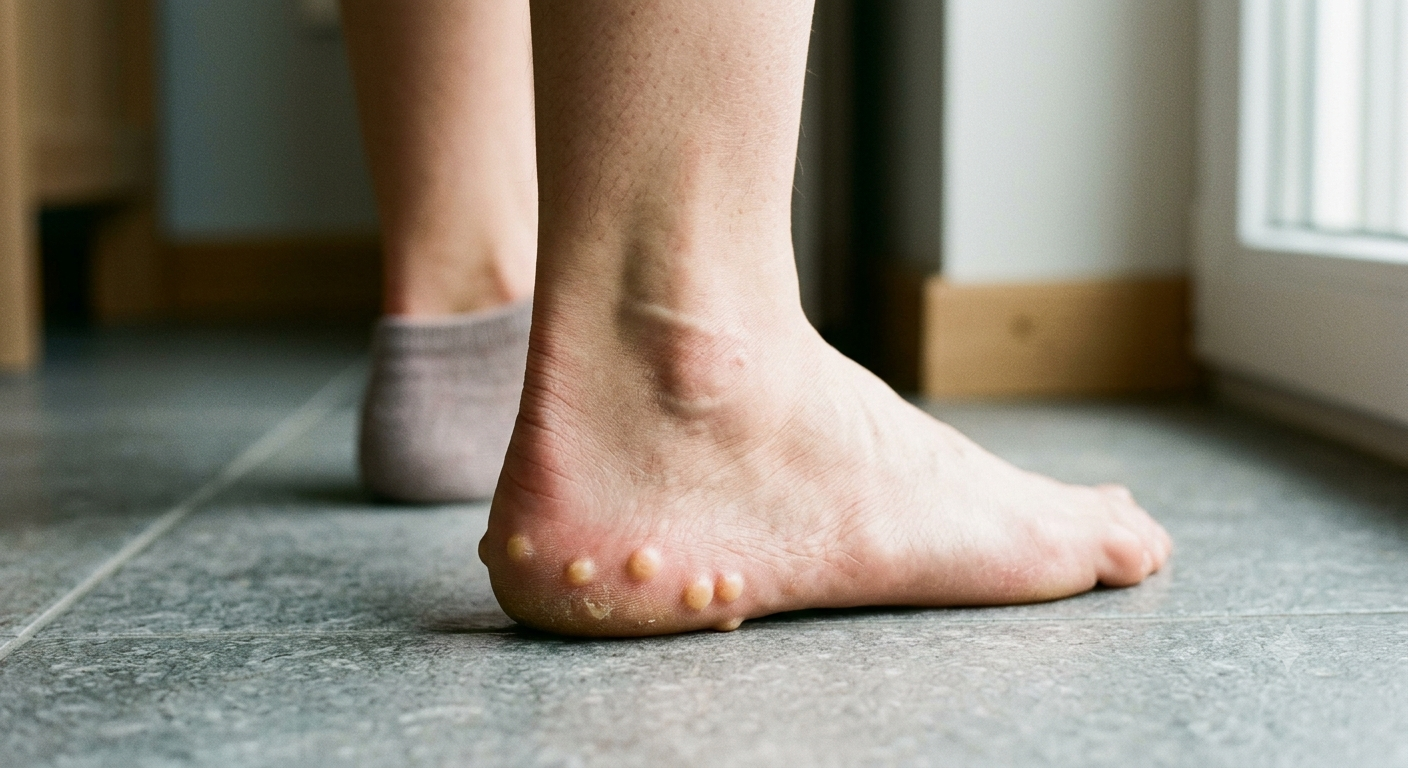
Piezogenic papules are bumps caused by pressure, most commonly on the heels.
Finding several small bumps on the heels can cause immediate concern, especially if they start to show up more prominently after spending time standing. After ruling out more alarming causes, a person may be relieved to know that some bumps are merely the result of an individual’s natural response to pressure under the skin. Piezogenic papules are an example of such bumps.
Piezogenic papules are small, soft bumps that are typically skin-colored or slightly yellow. They are most common along the edges of the heels and are caused by pockets of fat in the deeper tissues of the skin pushing outwards through openings in the connective tissue. As this only occurs when pressure is applied to the area, piezogenic papules are often not noticeable unless a person is standing or otherwise bearing weight on their feet.
While they are completely normal and harmless in most cases, it is also common for piezogenic papules to cause discomfort, even if they are only brought out by standing or walking. It is important to become acquainted with the causes, symptoms, and treatments of piezogenic papules, so an individual does not unnecessarily worry about pain in their heels.
What Are Piezogenic Papules?
Piezogenic Papules are described as small projections of normal fat tissue that have pushed through the layer of connective tissue. Such papules are mostly located on the heel, due to the pressure exerted there when walking.
The word piezogenic comes from the Greek word meaning pressure. This type of papule is formed when the body weight pushes against the heel, causing the projection of adipose tissue. Therefore, the bumps are often located in the areas of the body which experience the greatest amount of pressure.
There are several symptoms that describe piezogenic papules. Such projections are usually:
- Soft to the touch,
- Yellowish or skin-colored,
- Round or oval-shaped,
- Most noticeable when walking or standing,
- Disappear under the pressure.
It is important to note that these bumps are usually benign, since they represent a mechanical disruption of connective tissue. Piezogenic papules are not tumors, infections, or ulcerations, which often have unpleasant and dangerous symptoms. Usually, there is no need to worry about such a bump, unless it causes uncomfort or pain.
What Causes Piezogenic Papules?
- The reason why some people get piezogenic papules while others do not is unknown.
- However, it is believed to be caused by a variety of different influences.
Pressure on the Heel
- The condition is primarily caused by pressure from the heels when a person is standing, walking, running, or bearing weight.
- It is theorized that this pressure may cause the fat beneath the skin to protrude out of the connective tissue.
The Fat Compartment
- There are multiple reasons why some people may be more prone to developing these skin formations than others.
- It is believed that variation in the elasticity of the tissues and the density of one’s heels may play an influential role.
- Individuals whose bodies allow for greater protrusion of adipose tissue may be at a higher risk.
Activity Level
- It is not uncommon for those who are constantly on their feet to see a higher prevalence of piezogenic papules.
- As a result, jobs that require workers to stand throughout the workday, as well as physically demanding activities such as running or other high-impact sports, may raise the possibility of developing these bumps.
Weight and Pressure
- Weight is also considered to be a contributing factor, as increased pressure on the heels can lead to the formation of piezogenic papules.
- However, it is important to note that these bumps can appear in individuals of all body types.
Common Symptoms of Piezogenic Papules
Many people who have piezogenic papules do not experience any symptoms. In most cases, bumps are accidental discoveries during self-inspection or noticed when changing from standing to sitting positions.
The most common signs of the condition include:
- Bumps on the edges of the heels;
- Manifestation of the symptom while standing;
- Disappearance of bumps when taking a horizontal position or removing pressure on the feet;
- The ability to compress or press;
- The absence of changes on the surface of the skin.
In addition, some patients may feel pain or discomfort, especially if there are many papules. Moreover, a long duration of pressure on the feet causes discomfort. If a person has painful bumps, this is most likely due to the additional irritation of the surrounding tissues. In such a case, it is necessary to consult a doctor to determine the cause and prescribe the appropriate treatment.
Where Do Piezogenic Papules Usually Appear?
The most common place of the location of piezogenic papules is the heel, particularly on its lateral and medial borders.
They are usually located on the parts of the body where the pressure causes the underlying fat to protrude through the skin. Although the heels are the most common place, papules can occur anywhere on the body where the person experiences pressure on the folds of the skin. The bumps are more clearly visible when a person stands because the feet bear the whole weight of the body.
Thus, they become more noticeable due to increased pressure on the feet. Hence the pressure on the feet makes them stand out more.
How Are Piezogenic Papules Diagnosed?
A healthcare professional can often identify piezogenic papules through a physical examination.
During an evaluation, the provider may:
- Examine the appearance of the bumps
- Ask when they become visible
- Check whether they disappear with reduced pressure
- Review symptoms such as pain or tenderness
In most cases, additional testing is unnecessary because the appearance and behavior of the papules are distinctive.
However, if the bumps have unusual characteristics, continue growing, change color, or cause significant symptoms, a healthcare provider may recommend additional evaluation to rule out other skin conditions.
Are Piezogenic Papules Dangerous?
- For most people, piezogenic papules are a completely harmless and benign condition.
- They are neither cancerous, contagious, nor infectious, nor do they pose any significant danger to the patient. The only potential danger is that they may be tender to the touch when irritated.
- Knowing that piezogenic papules are generally harmless can help prevent panic when these strange bumps appear on the feet.
Treatment Options for Piezogenic Papules
Most of the cases of piezogenic papules do not require treatment. If there are no discomforts and the condition does not affect the patient’s life, doctors usually recommend leaving it alone.
Yet, if the bumps are bothering you, the following methods might help.
Reducing Pressure
The only method of reducing pressure is avoiding putting a lot of strain on your heels. This should be sufficient in most cases.
Supportive Shoes
It is a good idea to wear shoes that are comfortable and do not press on the back of your feet or legs. Moreover, shoes with special insoles may help relieve pressure on the heel.
Heel Cups or Padding
They may help take the pressure off the points on your heels where the papules develop. It is important to pay a special attention to the shoes you are wearing on a daily basis. Bumps caused by piezogenic papules are often exacerbated under the pressure of uncomfortable heel counters.
Light Intensity Activity Modification
A change in activity or its level of intensity can also be helpful. It can help reduce pressure on the feet in some cases.
If that is not sufficient, a doctor may suggest some other course of treatment. However, in the vast majority of cases, bumps from piezogenic papules do not require surgical removal.
When Should You See a Doctor?
Although piezogenic papules are usually not concerning, medical advice is recommended if you notice:
- Rapid changes in the bumps
- Significant pain
- Bleeding or skin breakdown
- Changes in color or appearance
- Uncertainty about what the bumps are
- Difficulty walking due to discomfort
A healthcare provider can confirm whether the bumps are truly piezogenic papules or another type of skin condition requiring different care.
Prevention Tips
While the prevention of piezogenic papules may not always be possible, particularly due to genetic factors and the structure of tissues, the reduction of pressure is likely to alleviate symptoms.
The following are preventive measures and treatments:
- Wearing comfortable shoes
- Reducing pressure over the affected area
- Avoiding pressure
- Keeping the feet healthy
- Seeking treatment for painful conditions
It is essential to ensure the feet are well cared for since it reduces irritation caused by the indentations.
Conclusion
Piezogenic Papules: Understanding the Condition and Management Options Available Today
Piezogenic papules are tiny bumps that may appear on the heel when the feet are under pressure. They are usually harmless and seldom require medical treatment.These bumps are common and almost always benign.
Most of the time, people do not feel them, but sometimes, they may cause discomfort. The good news is that you can usually manage the symptoms at home on your own.
Being aware of what they are and how they develop can help you understand why you have them and what to do about it. In addition, it helps differentiate between harmless bumps and those needing a doctor’s attention. Knowing how to respond to the symptoms can help you avoid many uncomfortable feelings.
If you have any concerns or questions about piezogenic papules, it is best to speak with a professional to get an accurate diagnosis and appropriate treatment plan.
Frequently Asked Questions
1. Are piezogenic papules dangerous?
No. Piezogenic papules are most often benign tumor associated with pressure on the heel tissue.
2. Do they disappear?
They are often persistent even after the pressure is discontinued, although they may be reduced. Most cases do not require treatment.
3. Do they hurt?
Most often they are asymptomatic but may be tender to touch and cause discomfort due to pressure.
4. Are they cancerous?
No, piezogenic papules are not precursors of malignancy or other abnormality but instead represent a reactive change of adipose tissue under tension in the connective tissue plane.
5. Who gets them?
Piezogenic Papules can affect anyone although those with increased pressure on the heel or specific tissue characteristics that promote the condition are at higher risk.